My problem with German football
I have a complicated relationship with German football. Not with the game itself. Not with the players. And not with the people who rejoice when the national team wins. On the contrary: I understand very well why people get swept up in such events. Football creates something that has become rare in our increasingly fragmented society: a sense of community. For a moment, differences seem to disappear. People stand side by side who would otherwise never meet. They celebrate together, suffer together, and experience something bigger than their everyday lives.
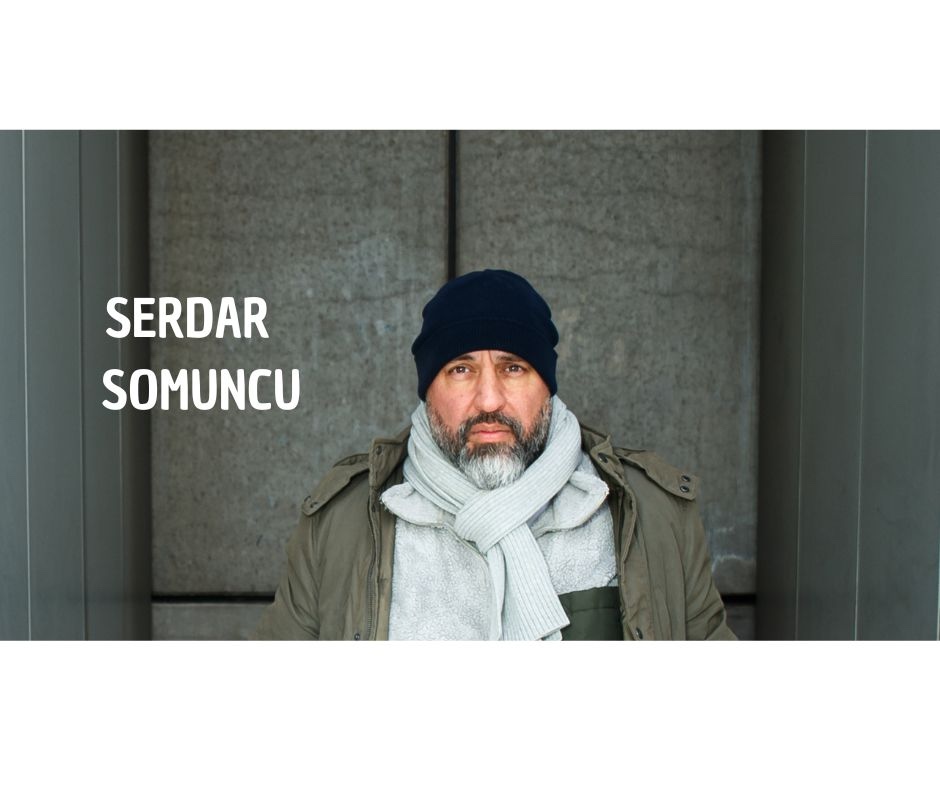
By Serdar Somuncu
By Serdar Somuncu
There's nothing inherently wrong with that.
My unease only begins later. It begins at the point where joy transforms into identity. When enthusiasm for a team suddenly becomes enthusiasm for the nation. When the desire to celebrate a sporting success together gives rise to the need to define oneself through national symbols, national belonging, and national greatness.
Perhaps that's why I never warmed to what is still glorified today as the great German summer fairytale. The 2006 World Cup is considered by many to be the moment when Germany finally found a relaxed relationship with itself. Flags everywhere, euphoria everywhere, people everywhere who suddenly dared to display the black, red, and gold without immediately being suspected of being nationalists.
That's the narrative that's still cultivated today.
However, I remember something else. I remember that at the same time, another part of Germany became visible. In April 2006, Ermyas Mulugeta, a German-Ethiopian, was brutally beaten in Potsdam and critically injured. The case caused outrage across Germany. Suddenly, there was public discussion about whether there were regions in East Germany where people of color should not travel alone. Even the then Federal Minister of the Interior, Wolfgang Schäuble, admitted that such places existed.
While cameras were focused on fan zones and the country celebrated itself, racist violence, right-wing networks, and so-called no-go areas were simultaneously being discussed. These two realities existed side by side. It's just that, to this day, one has been discussed more often than the other.
I have never claimed that football causes right-wing violence. That would be absurd. But I also consider it naive to believe that national euphoria is politically neutral. Feelings are never politically neutral. They cannot be. They are seized upon, amplified, and exploited. Those who want to inspire people with a national idea rarely start with slogans. They start with emotions.
That's precisely why I view such major events with skepticism.
The role of the media is particularly striking. For decades, tabloids have been adept at turning sporting competitions into national power struggles. Football is rarely portrayed as a sport. It's about honor, pride, revenge, and national validation. Opponents become rivals, rivals become enemies.
This was especially evident before the 2006 World Cup semi-final against Italy. At the time, there was serious discussion about a supposed boycott of Italian football. Italian stereotypes were exploited, jokes about the alleged Italian mentality circulated, and much of it was presented as harmless fun. Perhaps some of it was indeed meant harmlessly. But the question isn't how something is meant. The question is what effect it has.
This same pattern can still be observed today. Tabloids thrive on the narrative of a national "we." The famous headline "We are Pope!" The period following Joseph Ratzinger's election as Pope was just as indicative of this as many cover stories surrounding major football tournaments. The underlying theme is always the transformation of individual events into collective identity. A success becomes our success. A defeat becomes our defeat. A sporting event becomes a national issue.
Now, one might ask: What's so bad about that?
The answer lies in the developments we have been observing for years.
While public attention is repeatedly focused on Islamist terrorism, as if it were the greatest threat to democracy, right-wing extremist developments are often downplayed. Of course, Islamist terrorism is a real threat. No one in their right mind would deny that. But the figures have shown for years that right-wing extremist crimes represent a significantly larger and, above all, more commonplace problem in Germany.
In 2024, more than 84,000 politically motivated crimes were registered. Over 42,000 of these were attributed to the right-wing spectrum. This marked another record high. The number of right-wing extremist violent crimes also continued to rise. Anyone who reads the statistics can hardly come to any other conclusion: Right-wing extremism is not a fringe phenomenon. It is not a problem of a few scattered extremists. It is a societal reality that has been growing for years.
Nevertheless, one encounters the same reaction time and again. As soon as right-wing violence is mentioned, some kind of "Yes, but" follows. Yes, but what about the left? Yes, but what about migration? Yes, but what about social problems? Imagine if the same relativizations were voiced after an Islamist attack. Nobody would accept that.In contrast, it seems to have become an integral part of the debate surrounding right-wing extremism.
But my problem with football doesn't end with nationalism. It also concerns the notion that nations still play a central role in modern football.
The entire idea of a World Cup stems from a time when footballers were truly representatives of their countries. Today, the best players in the world compete in international leagues week after week. A French national player plays in England, a German in Spain, a Brazilian in Italy. The modern professional footballer's true home is no longer the nation, but the club that pays him.
National teams, therefore, often seem like temporary alliances of convenience. Many players arrive after a long season, participate in a tournament, and then return to their everyday football lives. This doesn't mean they don't care about their country of origin. But the romantic notion that eleven men are fighting here on behalf of the soul of a nation increasingly seems like a relic from another era.
Perhaps this also explains why the traditional football powerhouses are facing ever greater difficulties. Brazil, Spain, France, Germany, and Italy may still possess the individually stronger players. Nevertheless, they regularly struggle against teams from smaller countries. Playing for the national team often seems to hold a higher value there than among the established footballing nations.
Anyone who has watched teams like Croatia, Morocco, Georgia, or Iceland in recent years could sense this difference. For them, it wasn't just about another tournament. It was about a historic opportunity to showcase their country on a grand stage.
Paradoxically, this very fact reveals the emptiness of modern nationalism. While fans and the media still pretend that nations are competing against each other, top-level football has long since become a globalized network of clubs, investors, sponsors, and marketing interests. The flags remain. The world they came from, however, barely exists anymore.
Perhaps my unease also stems from the fact that the World Cup itself has increasingly become a product. It used to be a rare event. Today, everything is bigger, longer, and more commercial. More teams, more matches, more marketing, more sponsors. What was once exceptional is threatening to become the norm.
The bigger the tournaments become, the less meaningful they often seem to be.
I'm starting to wonder whether a club system with strong international competitions wouldn't be a much better fit for the reality of modern football than the ever-expanding World Cup. The Champions League often reflects the true balance of power in world football more accurately than a four-week tournament of national teams.
Added to this is the political dimension of commercialization. The awarding of major tournaments is no longer based solely on sporting criteria. The 2018 World Cup was held in Russia. The 2022 World Cup in Qatar. The 2034 World Cup is scheduled to take place in Saudi Arabia.
Time and again, countries are chosen that are criticized for human rights violations, a lack of press freedom, or authoritarian structures. Football is increasingly being used as an instrument of so-called sportswashing. Governments buy themselves a modern image with sporting events, while the real political problems fade into the background.
Here, too, we see the same trend as with nationalism: football is being used. Sometimes for political purposes, sometimes for economic interests, sometimes for ideological narratives.
Perhaps it would therefore be sensible to fundamentally rethink the World Cup. Smaller tournaments. Less commercialism. A stronger focus on established football cultures. Perhaps also more frequent joint bids from several countries, instead of constantly awarding new prestige projects to states where football is primarily viewed as a political instrument.
Of course, the next World Cup will still thrill millions of people. And probably, one of the major footballing nations will win the title again. Perhaps even England. England, of all places, which has considered itself the inventor of football for decades and yet can only boast a single World Cup title. A title whose most famous goal is still debated to this day.
Perhaps there is even a certain irony in this. Because while many other nations have long since learned how to handle success, England sometimes seems like a perpetual waiter. Like someone who has been knocking on the same door for decades, hoping to finally be let in. Perhaps that's exactly what it is.As a team, dangerous.
Ultimately, though, what's more important to me is who we are as a society than who wins the World Cup.
We live in a time when antisemitism has once again become openly visible. When right-wing extremist crimes are reaching record levels. When democratic institutions are increasingly under pressure. In such a time, I consider vigilance more important than national euphoria.
I want to be able to enjoy a good football match. But I don't want to become part of an emotion that is exploited by the wrong people for the wrong purposes. Not in a country whose history should have taught us how thin the line can be between harmless enthusiasm and dangerous seduction.
Football is just football.
At least until others make something out of it that goes far beyond the sport.
And that's precisely where my problem with German football begins.
June 15, 2026
©Serdar Somuncu
"The new book - Lies - A Cultural History of a Human Weakness"
*Serdar Somuncu is an actor and directord director
LINK TO THE NEW BOOK
My unease only begins later. It begins at the point where joy transforms into identity. When enthusiasm for a team suddenly becomes enthusiasm for the nation. When the desire to celebrate a sporting success together gives rise to the need to define oneself through national symbols, national belonging, and national greatness.
Perhaps that's why I never warmed to what is still glorified today as the great German summer fairytale. The 2006 World Cup is considered by many to be the moment when Germany finally found a relaxed relationship with itself. Flags everywhere, euphoria everywhere, people everywhere who suddenly dared to display the black, red, and gold without immediately being suspected of being nationalists.
That's the narrative that's still cultivated today.
However, I remember something else. I remember that at the same time, another part of Germany became visible. In April 2006, Ermyas Mulugeta, a German-Ethiopian, was brutally beaten in Potsdam and critically injured. The case caused outrage across Germany. Suddenly, there was public discussion about whether there were regions in East Germany where people of color should not travel alone. Even the then Federal Minister of the Interior, Wolfgang Schäuble, admitted that such places existed.
While cameras were focused on fan zones and the country celebrated itself, racist violence, right-wing networks, and so-called no-go areas were simultaneously being discussed. These two realities existed side by side. It's just that, to this day, one has been discussed more often than the other.
I have never claimed that football causes right-wing violence. That would be absurd. But I also consider it naive to believe that national euphoria is politically neutral. Feelings are never politically neutral. They cannot be. They are seized upon, amplified, and exploited. Those who want to inspire people with a national idea rarely start with slogans. They start with emotions.
That's precisely why I view such major events with skepticism.
The role of the media is particularly striking. For decades, tabloids have been adept at turning sporting competitions into national power struggles. Football is rarely portrayed as a sport. It's about honor, pride, revenge, and national validation. Opponents become rivals, rivals become enemies.
This was especially evident before the 2006 World Cup semi-final against Italy. At the time, there was serious discussion about a supposed boycott of Italian football. Italian stereotypes were exploited, jokes about the alleged Italian mentality circulated, and much of it was presented as harmless fun. Perhaps some of it was indeed meant harmlessly. But the question isn't how something is meant. The question is what effect it has.
This same pattern can still be observed today. Tabloids thrive on the narrative of a national "we." The famous headline "We are Pope!" The period following Joseph Ratzinger's election as Pope was just as indicative of this as many cover stories surrounding major football tournaments. The underlying theme is always the transformation of individual events into collective identity. A success becomes our success. A defeat becomes our defeat. A sporting event becomes a national issue.
Now, one might ask: What's so bad about that?
The answer lies in the developments we have been observing for years.
While public attention is repeatedly focused on Islamist terrorism, as if it were the greatest threat to democracy, right-wing extremist developments are often downplayed. Of course, Islamist terrorism is a real threat. No one in their right mind would deny that. But the figures have shown for years that right-wing extremist crimes represent a significantly larger and, above all, more commonplace problem in Germany.
In 2024, more than 84,000 politically motivated crimes were registered. Over 42,000 of these were attributed to the right-wing spectrum. This marked another record high. The number of right-wing extremist violent crimes also continued to rise. Anyone who reads the statistics can hardly come to any other conclusion: Right-wing extremism is not a fringe phenomenon. It is not a problem of a few scattered extremists. It is a societal reality that has been growing for years.
Nevertheless, one encounters the same reaction time and again. As soon as right-wing violence is mentioned, some kind of "Yes, but" follows. Yes, but what about the left? Yes, but what about migration? Yes, but what about social problems? Imagine if the same relativizations were voiced after an Islamist attack. Nobody would accept that.In contrast, it seems to have become an integral part of the debate surrounding right-wing extremism.
But my problem with football doesn't end with nationalism. It also concerns the notion that nations still play a central role in modern football.
The entire idea of a World Cup stems from a time when footballers were truly representatives of their countries. Today, the best players in the world compete in international leagues week after week. A French national player plays in England, a German in Spain, a Brazilian in Italy. The modern professional footballer's true home is no longer the nation, but the club that pays him.
National teams, therefore, often seem like temporary alliances of convenience. Many players arrive after a long season, participate in a tournament, and then return to their everyday football lives. This doesn't mean they don't care about their country of origin. But the romantic notion that eleven men are fighting here on behalf of the soul of a nation increasingly seems like a relic from another era.
Perhaps this also explains why the traditional football powerhouses are facing ever greater difficulties. Brazil, Spain, France, Germany, and Italy may still possess the individually stronger players. Nevertheless, they regularly struggle against teams from smaller countries. Playing for the national team often seems to hold a higher value there than among the established footballing nations.
Anyone who has watched teams like Croatia, Morocco, Georgia, or Iceland in recent years could sense this difference. For them, it wasn't just about another tournament. It was about a historic opportunity to showcase their country on a grand stage.
Paradoxically, this very fact reveals the emptiness of modern nationalism. While fans and the media still pretend that nations are competing against each other, top-level football has long since become a globalized network of clubs, investors, sponsors, and marketing interests. The flags remain. The world they came from, however, barely exists anymore.
Perhaps my unease also stems from the fact that the World Cup itself has increasingly become a product. It used to be a rare event. Today, everything is bigger, longer, and more commercial. More teams, more matches, more marketing, more sponsors. What was once exceptional is threatening to become the norm.
The bigger the tournaments become, the less meaningful they often seem to be.
I'm starting to wonder whether a club system with strong international competitions wouldn't be a much better fit for the reality of modern football than the ever-expanding World Cup. The Champions League often reflects the true balance of power in world football more accurately than a four-week tournament of national teams.
Added to this is the political dimension of commercialization. The awarding of major tournaments is no longer based solely on sporting criteria. The 2018 World Cup was held in Russia. The 2022 World Cup in Qatar. The 2034 World Cup is scheduled to take place in Saudi Arabia.
Time and again, countries are chosen that are criticized for human rights violations, a lack of press freedom, or authoritarian structures. Football is increasingly being used as an instrument of so-called sportswashing. Governments buy themselves a modern image with sporting events, while the real political problems fade into the background.
Here, too, we see the same trend as with nationalism: football is being used. Sometimes for political purposes, sometimes for economic interests, sometimes for ideological narratives.
Perhaps it would therefore be sensible to fundamentally rethink the World Cup. Smaller tournaments. Less commercialism. A stronger focus on established football cultures. Perhaps also more frequent joint bids from several countries, instead of constantly awarding new prestige projects to states where football is primarily viewed as a political instrument.
Of course, the next World Cup will still thrill millions of people. And probably, one of the major footballing nations will win the title again. Perhaps even England. England, of all places, which has considered itself the inventor of football for decades and yet can only boast a single World Cup title. A title whose most famous goal is still debated to this day.
Perhaps there is even a certain irony in this. Because while many other nations have long since learned how to handle success, England sometimes seems like a perpetual waiter. Like someone who has been knocking on the same door for decades, hoping to finally be let in. Perhaps that's exactly what it is.As a team, dangerous.
Ultimately, though, what's more important to me is who we are as a society than who wins the World Cup.
We live in a time when antisemitism has once again become openly visible. When right-wing extremist crimes are reaching record levels. When democratic institutions are increasingly under pressure. In such a time, I consider vigilance more important than national euphoria.
I want to be able to enjoy a good football match. But I don't want to become part of an emotion that is exploited by the wrong people for the wrong purposes. Not in a country whose history should have taught us how thin the line can be between harmless enthusiasm and dangerous seduction.
Football is just football.
At least until others make something out of it that goes far beyond the sport.
And that's precisely where my problem with German football begins.
June 15, 2026
©Serdar Somuncu
"The new book - Lies - A Cultural History of a Human Weakness"
*Serdar Somuncu is an actor and directord director
LINK TO THE NEW BOOK
Write a comment