After the AfD seized power
In the Bundestag, before the imperial eagle, a tall, slender, blonde woman stands at the lectern. She bellows inflammatory, anti-Muslim tirades. Hundreds, if not thousands, of people with dark hair, full beards, and headscarves are crammed into freight cars, bound for a place from which they will never return, listening to the raindrops pounding hard against the train's metal roof. Turkish and Arab shops in cities have been marked with a crescent moon. In the basements of the republic, clandestine resistance is forming. Is this the Germany we are heading towards?
By Daniel Nuber
By Daniel Nuber
March 25, 2029. Friedrich Merz is running again for Chancellor of the Federal Republic of Germany. His face, already gaunt due to his slight, gaunt build, has become even thinner. The mood in the country is completely different than it was four years ago. His predecessor, Olaf Scholz, whose rule has long since become outdated, paved the way for the Alternative for Germany (AfD) with his traffic light coalition government and its associated ideological projects. Even under Angela Merkel, who governed before Scholz, the mood shifted after she welcomed countless refugees and promised the population that they would contribute to prosperity. That opened the door for the AfD. Merz tried to salvage what he could with his conservative policies, but little of that remained in recent years. The media sensationalized knife attacks by Syrian and Afghan asylum seekers to an excessive degree, and biased and deliberately incomplete short videos circulated online, intended to spread specific propaganda. Some of this, despite its incompleteness, was accurate, and some of the resulting feelings could even be verified by statistics from the Federal Criminal Police Office, although the majority of the population had and still has little interest in numbers. But now, it seems, the public has had enough. Enough of attacks, of vehicles driving into markets and parades, enough of rapes and abuse by people from the Middle East, whom they contemptuously call "golden nuggets" in their comments. In recent months, the CDU/CSU had tried to address public sentiment and the problem through high-profile deportations and increasing isolation. Funding for non-governmental organizations dedicated to sea rescue was cut, so that boats carrying asylum seekers capsized in the Mediterranean and no one came to save them. The police even removed asylum seekers subject to deportation from psychiatric hospitals and flew them back to their home countries. Without any possibility of appeal, without acknowledging the objection that they would not receive adequate medical care in Syria and Afghanistan and that the deportation might therefore be unconstitutional. None of that mattered. The people had to go to prevent the AfD from gaining ground; to stop the resurgence of National Socialism in Germany.
And they all warned. Oh, how they warned! Public broadcasters never tired of emphasizing that the AfD maintained a certain ideological affinity with the Nazi Party. Politicians from the party with the blue logo and the red arrow liked to speak of a "cult of guilt" when it came to coming to terms with the Holocaust perpetrated by Nazi Germany, in order to trivialize it. Much like the National Socialists of that era, the Alternative for Germany also prioritizes the traditional image of women and gender roles: woman, mother, child, preferably blonde and blue-eyed. Dangerous in an uncertain time, where all kinds of family constellations are possible and many a German city is paved with LGBTQ flags, which symbolize many things, but not a conservative, right-wing, or even nationalist worldview. When the media noticed that their supposed efforts to educate the public about the AfD weren't causing its popularity ratings to fall, they excluded its representatives from public discourse. No talk shows. No public events. Anyone even ideologically close to the AfD could even be banned. He lost his job and had to fight hard to get it back in court. But no moderator, no journalist, no media professional grasped that the party's publicity lay not in political appearances, but rather in every single breaking news report about a knife attack or an assault. Furthermore, new media outlets emerged online that offered politicians from the right-wing conservative spectrum a platform, and even more: there were even people who were neither journalists, politicians, nor activists, but YouTubers, who presented their own opinions on the public debate and often had more logical and coherent presentations and arguments than those from liberal, libertarian, and left-wing camps. Logical, however, does not necessarily mean true. But that doesn't interest the voter in the slightest. What the radio was in the 1930s, the internet is now, in the 2020s.
Moreover, the Russians have been trying to conquer Ukraine since 2022. The West's response has primarily been arms deliveries. People are now tired of war and even more tired of the feeling of being powerless. To be a victim. The Western media machine has offered everything in recent years: fear of a world war, fear of a nuclear war, fear of a Russia waging a war of conquest. That the Russian miThe fact that the military had to resort to museum-bought tanks after a few months - so be it. The main thing was fear. Since the European Union and the United States weren't making progress with arms deliveries, and the economic sanctions didn't bring the war to an end, the AfD proposed: The guns must fall silent so that negotiations with Putin could take place in the resulting calm. At the same time, a supposedly madman was ruling overseas. Trump, a seemingly completely irrational real estate mogul whose interests served only himself, then his country, and only secondarily the world's population, fueled nationalist ideas worldwide. Because nationalism is initially like cotton wool, which countries cuddle up to when things become uncomfortable around them and within themselves; but it is highly flammable and burns quickly, burning everything down. Nevertheless, they came. Perhaps not the nationalists we imagine, not the stern men in gray uniforms with sewn-on swastikas and lightning bolts, but rather those in fine suits, who mostly speak moderately and smile kindly. Even some women were and are involved. They are all united by the desire for separation: the dissolution of the European Union, the closing of borders, the rejection of refugee boats, and the reduction of migration from certain regions of the world. Cultivated nationalism also includes the ambition to devour other states. Trump, who wants to claim Greenland, is one example--as is the lack of response from European allies to such fantasies of omnipotence. But all of this is highbrow politics. The common people are concerned with something else: security and stability. In the last elections in 2025, the AfD came in a close second to the CDU/CSU, making it the second strongest party in Germany. Today, four years later, elections are being held again--and by all appearances, Friedrich Merz's efforts were insufficient, as the initial results show him with well over 30 percent of the vote.
June 10, 2029 "I swear that I will dedicate my strength to the well-being of the German people, increase their welfare, avert harm from them, uphold and defend the Basic Law and the laws of the Federation, conscientiously fulfill my duties, and administer justice to everyone." As with many of her public appearances, Alice Weidel wore a light-colored jacket with a tight bun for her swearing-in as Chancellor. Public and, above all, media outrage is immense following the election results. The SPD practically no longer exists. When someone mentions the Greens, they usually only mean the color. The CDU/CSU is still represented with 25 percent, but must defer to the AfD. Immediately after the election results were announced, the AfD declared a "complete realignment of policy." The internet is ecstatic, especially those so-called alternative media outlets that, in recent years, have seen the devil lurking around every corner and then depicted him in YouTube videos. Countless attacks on asylum seeker accommodations have already occurred in recent weeks. People working in refugee shelters were threatened. Schools with high percentages of migrant students were set ablaze. The first Germans have left the country, fearing a repeat of what happened with Hitler. Turkish and Arab shops are increasingly being marked with the Turkish crescent and subsequently vandalized. Vigilante groups are forming at border crossings, specifically targeting people from the Middle East. Social media is flooded with reports of dark-haired, brown-skinned individuals beating up pensioners and harassing and killing men and women of Central European appearance. These reports cannot be verified. However, they serve their purpose: those who have always wanted to express their xenophobia through violence now feel justified in doing so.
Neither Weidel nor her Deputy Chancellor and Federal Minister of Economics, Thilo Chrupalla, have seriously commented on these incidents. They claim these are oversimplified accounts and question their accuracy, as "the mainstream media tends to frame anyone as they see fit if they don't fit their worldview." Of course, a mention of the promise that public broadcasting will be abolished anyway is a must. On Markus Lanz and Sandra Maischberger's shows, the conversation immediately turns to nationalism--not with those supposedly responsible for it, but with politicians from defunct parties that have since become irrelevant. Occasionally, academics with baffling theories also appear, theories they think, write comprehensibly, but can't possibly articulate verbally in a coherent way. "This country is finished," some users comment under the videos online. "ALICE FOR GERMANY!!" is a common refrain. But the streets are...Already a battlefield. The AfD halted arms deliveries to Ukraine in record time. Putin still remains silent, but has occupied large parts of Ukraine and forced Zelensky to flee. Poland and the Baltic states are massing troops on their borders. Trump, who has managed to cling to power through political trickery, sometimes imposes 300 percent tariffs, sometimes 20 percent, sometimes none at all. Sometimes he likes Putin, sometimes he doesn't. "Alice," he told Fox News, "is such a beautiful woman. If you want to calm her down you just have to grab her by the p..." Intellectuals in Germany are speechless. In many basements, people are drinking, listening to music, and plotting the coup. Nobody believes that Germany will embark on its own campaign of conquest--the connections between the Nazi Party and the AfD don't extend that far. The rampage of fascist forces within Germany is motivation enough for leftists to call themselves resistance fighters and "do something." "When injustice becomes law," some quote Bertolt Brecht online, because they themselves are incapable of insight and complex thought processes, "resistance becomes a duty." Apart from violent brawls and clashes with the police, there is no sign of genuine resistance yet.
The only resistance coming from the business sector is business. High-ranking representatives of the business community are opposing the reintroduction of nuclear energy. They argue that these technologies have been superseded by wind and solar power, and there is no reason to return to them. The first CEOs have already vanished without a trace. Videos of them, apparently generated by AI, appear on social media, showing them carefree on vacation. "We naturally find it regrettable," says the AfD press spokesman, "that some top executives are leaving Germany without explanation and prioritizing vacation over work." And she smiles mischievously, but nothing can be proven. Meanwhile, Alice Weidel holds almost hysterically adolescent Zoom meetings with Putin, openly congratulating him on the pacification of Ukrainian territory. The opposition is furious; even the neighboring European states, now also led by right-wing conservatives, criticize the German government's benevolent stance toward Russia. Just a few weeks after taking office, the European Union is in ruins. Commission decrees are hardly implemented anymore, let alone credible agreements being reached--meetings resemble a theatrical performance. The first EU member states are closing their borders to one another, primarily because Germany is deporting and rejecting refugees in all directions. The Federal Constitutional Court cannot process cases as quickly as lawsuits are being filed.
"We gladly welcome anyone in Germany who is willing to submit to our culture and our language and contribute to the German success story," is the message from the AfD-led Foreign Ministry. "We will banish good-for-nothings, knife-wielding men, and similar types from our beautiful country without mercy." Here, too, resistance is growing from the business sector, which warns against generalizations and points to a lack of workers. "Every employee who leaves or doesn't even come in weakens our gross domestic product," they say. But nobody cares. The first YouTubers, who have long had a larger reach than established journalists, report in their vlogs about trains arriving at a fenced-off and monitored area. "Hey guys, it's like Area 51 or something," says one of them, filming himself. "There are signs everywhere and stuff, and there's a soldier who's already sent me away a few times." Signs indicating a military restricted area are indeed visible. A few meters beyond the fence, high concrete walls begin. They cannot be seen from the outside. They cannot be climbed. Nobody knows for sure, but everyone suspects what might be happening here. But the vast majority remain silent, knowing that later they will have known nothing.
August 4, 2029. Schools have changed drastically. Children with disabilities are excluded and grouped into separate classes so as not to "impair the learning progress of the other students," as the Ministry of Culture puts it. The same is happening to adolescents who speak only moderate to poor German. Many of them are no longer around. In schools in disadvantaged areas, some classes have been halved or eliminated entirely because some families have vanished without a trace. The notorious parks, such as Görlitzer Park in Berlin, are practically besieged by the police. Anyone deemed suspicious is apprehended, searched, and detained, even without evidence. How long will this continue?The timeframe varies - 24 hours, 72 hours, and even longer for rebellious suspects. Courts are already partially undermined by AfD-affiliated lawyers who turn a blind eye, sometimes even both. The Germans remain silent, as they always have been. Protest, if it occurs at all, appears online and in heated television debates that have no political consequences. Satirists attempt to ridicule the seriousness of the situation, but even they are more moderate than before the AfD's rise to power, because they know they could become one of those who suddenly disappear - it's a game of cat and mouse, allowing for fun but no criticism.
The crumbling European Union and the USA, led by an unpredictable real estate mogul, have led Japan to attack Taiwan. The Japanese government explained that Taiwan is an island that historically belongs to Japan and that it is time for what belongs together to grow together again. Trump is now flirting even more with Greenland and sending submarines to its strategic proximity. Whether these are nuclear-powered or nuclear-equipped submarines is not specified. Due to these developments, Germany is discussing its own nuclear armament - also because France and Great Britain no longer guarantee to provide nuclear protection for the German region in the event of any kind of war. "We still consider the USA our partner," says Alice Weidel, "but we have to recognize that the increasing aggression against European soil could also affect us." She added that there is no interest in a military confrontation. As before her election, Weidel and Chrupalla appear together in front of the cameras. "As mediators, we are hoping for our Russian friends, who can be of assistance in negotiations with both Japan and the USA," Chrupalla added. Russian state media are propagating the idea that Russia is assuming the role of Europe's best friend. The USA is abdicating and now showing its true imperial face, which Putin and his followers have known for decades. Cautious congratulations are coming from Sarah Wagenknecht and her alliance. Germany has finally understood who is friend and foe. Hardly anyone has been interested in the BSW for a long time now. Like most other parties, it has also vanished into oblivion.
The media landscape is also gradually changing. Broadcasting fees haven't been abolished, but suspended until further notice. Directors and journalists of public broadcasters are lamenting their plight and pointing to the Basic Law (German Constitution). Due to the ever-decreasing range of public broadcasting content, propaganda channels are dominating. People are increasingly turning to social media, where algorithms ensure they see what they want to see and not what they want to see. That's what they should be seeing. It's just that nobody notices. Although it's openly communicated that crime rates are falling--whether this is actually true or fake news cannot be independently verified--many voters are still calling for even more deportations and harsher measures, because countless short videos still focus on homicides, stabbings, and sexual offenses, tirelessly linking them to migrants. Turkish and Arab restaurants are burning across the country. Bloody clashes erupt in front of shisha bars between owners, patrons, so-called concerned citizens, and nationalists. The police are willingly turning a blind eye. On Telegram, conspiracy theorists are organizing, reinterpreting the situation: Afghanistan and Syria are deliberately sending criminals to Germany to destabilize the country. This can only be solved, they claim, by razing these countries to the ground...
Back to the year 2025. This is how some people seem to imagine the rule of the Alternative for Germany (AfD): rapid spirals of escalation, A release and self-legitimization of racist and nationalist violence, a new pro-Russian sentiment, and, of course, the expulsion and deportation of Muslims. Analogies to the Nazi seizure of power are all too readily drawn. We, too, experienced a recession, political instability, and public discontent. The AfD uses Nazi rhetoric and is dangerous because it apparently wants to overthrow the free and democratic order. Astonishing parallels are drawn to the 1930s to demonstrate how dangerous the party is--even including violent fantasies from adolescent Green Party youths who fantasize about armed violence as an instrument of resistance in podcasts. All of this, and especially the almost pathological attempt to draw analogies between our time and the time of the (auTo point out the nascent National Socialism of the past trivializes Nazi Germany and the crimes associated with it, because history does not repeat itself.
The Holocaust and the Second World War were not events that occurred overnight or spontaneously. Hatred of Jews dates back to antiquity--the mass extermination of Jews by the National Socialists was the tragic culmination of almost two thousand years of antisemitism. The Nazi regime, too, was a consequence of the preceding years, the economic crises, and the First World War. Hitler's election was a result of the Treaty of Versailles and the unstable Weimar Republic, coupled with an unemployment rate of up to almost 30 percent, incomparable to today's levels, and the associated poverty. In other words, the society that allowed the Nazi Party to emerge and become successful is not the same as the one in which we live today. In Germany, we currently have an unemployment rate of only 6.3 percent--not even a third of the 29.9 percent it was in 1929. The end of the First World War was barely 20 years in the past, and the country lost significant portions of its territory--we haven't experienced war since 1945. Around 21 percent of people living in Germany today are affected by poverty. No one should live in poverty or be affected by it, but compared to the 1930s, they are comparatively well off--back then, there was no basic income, employment counselors, or social workers. The conditions on which political parties thrive and perish are therefore different than they were a hundred years ago. Equating the AfD's ideology with that of the NSDAP and perceiving it as a similar threat to the Nazis trivializes the murder of millions of innocent people, trivializes expulsion, and trivializes a world war that had far-reaching consequences for future generations.
In our minds, the Nazi regime was the incarnation of the devil on earth. That's why it serves as a benchmark for evil--worldwide. Donald Trump and Vladimir Putin have also been compared to Hitler. These comparisons, however, lack any rational basis, and their inflationary use trivializes the National Socialists. Therefore, we should try to categorize parties and politicians according to the spirit of the times and avoid drawing historical parallels that distort or even render the debate impossible. This is also why engaging with the AfD is only moderately successful--apart from accusations of Nazism and comparisons to Adolf Hitler, there is hardly any constructive dialogue. It could certainly be argued, however, that the AfD's goals would do the country more harm than good--but for different reasons. Let's examine this more closely: The AfD wants to reintroduce the Deutsche Mark and prefers cash payments. A separate currency would not only be inconvenient due to the exchange process when traveling abroad, but it would also be economically unsound: Between 1987 and 1998, the cumulative inflation rate under the Deutsche Mark was almost 30 percent, while the euro, since its introduction, has only experienced a cumulative inflation rate of around 2 percent. A return to the Deutsche Mark would therefore have nostalgic value at best, but no economic worth. Other fanciful financial projects are also being proposed: a EUR20,000 bonus for having children, retirement after 45 years of contributions, and generous tax cuts, which together would amount to a deficit of EUR100 billion. In the long run, this would jeopardize the state budget and the financial viability of our country, especially since the party has yet to provide any verifiable answers as to how all of this would be financed--except through cuts to social welfare and reduced development aid, which alone would not be sufficient.
If we look at the handling of the increasing global digitalization and the AfD's approach to it, we see that regressive thinking is also paramount here. The party wants to restrict digitalization and prioritize citizens' privacy. On the one hand, however, digital technology and privacy are not mutually exclusive; on the other hand, a growing number of companies and citizens are voluntarily embracing modern technologies because they simplify professional and working life. It is certainly true that the flow of information must be regulated to make the misuse of information as difficult as possible. However, attempting to slow down the digitalization process itself, as a Central European and economically strong country, would set our already analog Germany back even further and would not contribute to international competitiveness.
School and vocational training also contribute to competitiveness. This is especially true for aIn a resource-poor country like ours, knowledge is capital. The Alternative for Germany (AfD) party is also rather backward-looking in this regard: inclusive classes are to be abolished; instead, children with learning disabilities are to be taught in separate classes. Far more serious than this, however, would be the party's proposed abolition of compulsory schooling. The state, they argue, can no longer reliably guarantee education, so there should be the option of homeschooling or having children educated elsewhere. The fact that there are good reasons for compulsory schooling is simply ignored: socialization, objectively verifiable education, a structured daily routine for adolescents, and yes, even verified content that is taught are important. That our school system needs reform is beyond question. However, reforms should be progressive and not destroy the achievements of recent decades. While these are, at best, foolish and backward-looking ideas, there is no trace of National Socialism or Hitler anywhere to be seen.
The situation is somewhat different when it comes to migration and asylum policy. First of all: There is no explicit talk of extermination or expulsion of specific groups of people here. However, the AfD makes no secret of the fact that it would prefer not to have people from Muslim cultural backgrounds in Germany and, above all, wants to deport asylum seekers and migrants who have committed crimes as quickly as possible. Ever since former Federal President Christian Wulff said that Islam belongs to Germany, there have been ongoing discussions about whether this is actually the case. In 2016, the AfD included the statement in its party platform: "Islam does not belong to Germany," thus clearly positioning itself against Wulff and Islam as part of the Federal Republic. Years later, it adopted the term "remigration," which could certainly be meant as a synonym for deportation--not to concentration camps, but to the countries of origin of the (deportable) migrants and asylum seekers. Here, drawing a line between racism and the legitimate application of the law becomes more difficult because the focus isn't simply on the legal situation and its enforcement, but rather on inciting hatred against certain minorities by defaming migrants as "welfare-supported knife-wielding men" and "headscarf-wearing girls." It is understandable and correct that those who do not have the right to remain in Germany must leave. Naturally, this must be enforced; otherwise, the right to asylum and residency is a farce--those who can stay anyway don't need to apply if the outcome has no consequences. The problem here is that the AfD's platform openly adopts racist worldviews--just not with the same harsh and offensive language used by the National Socialists, but enough to regularly face accusations of incitement to hatred.
It is understandable and correct that those who do not have the right to remain in Germany must leave. The AfD party platform states that the party is committed to "German guiding culture" and views the ideology of multiculturalism as a serious threat to social peace and the continued existence of the nation as a cultural unit. The German state and civil societies must "confidently defend" German cultural identity. But what does this mean? First, a clear dividing line is drawn between German and all other cultures. What the Nazis considered the blond, blue-eyed German, the AfD defines as anyone who exhibits German cultural characteristics. Multiculturalism poses a threat to the continued existence of cultural "national unity," the party states. In other words, the German, who is now identifiable not by external but by cultural characteristics, is part of a German-cultural mass within the nation, which is to remain just that. Any other cultural influences not only endanger this homogeneity, but also worsen it. With this, the party abandons the constitutional principle that all people are equal and thus violates the Basic Law. Unlike the NSDAP, it no longer defines the German as a race, but rather as a cultural nation that is evidently superior to others; that it is superior to others, in its view, can be deduced from the feared deterioration and abolition of German national culture through multiculturalism. Combined with the harsh rhetoric, the explicit and recurring mention of Islam in the party platform, which it claims does not belong to Germany, and the inflammatory public appearances, it still cannot be said that Muslims In Germany, she fears for her life if the AfD comes to power.n would have to. It is conceivable, however, that these seemingly innocuous descriptions of national identity and the attacks on it could, in the long run, pave the way for a corresponding "counterattack" against Muslims or other influential cultures that the AfD perceives as enemies.
In light of Germany's historical responsibility, such a party should be considered unelectable--even if all its other points were reasonable and correct. Due to its own history, Germany is the leading expert on genocide and racism, yet voters remain oblivious to the danger, which is both obvious and hidden between the lines. The fact that most people do not engage deeply with the Alternative for Germany or any other party is certainly part of the explanation for its success in the last federal election. Perhaps, however, part of the truth is that the belief in being better, stronger, more intelligent, and more valuable than everyone else in the world is still part of German identity. After all, the party's other political ideas are likely unknown. Few of its voters will have asked themselves how The AfD's platform is unclear on how it intends to deal with children with learning disabilities in schools, what the consequences of reintroducing the D-Market would be, or how it envisions digitalization. The mere highlighting and denigrating of non-Germans, non-Europeans, and especially Muslims residing in Germany led to its becoming the second-strongest party in the last federal election. This says more about the "cultural German" than about the party itself.
Undoubtedly, Europe is indeed facing a growing problem with (deportable) asylum seekers from North Africa and the Middle East who are resorting to violence. Just a few weeks ago, riots broke out in Spain after North Africans brutally beat a Spanish pensioner, leaving him hospitalized, for no apparent reason. In response, Spaniards gathered and attacked people of North African appearance across the country. Recently, a Syrian man was stabbed by a Kenyan man in Klagenfurt, Austria. Such reports have been increasing for months. This fosters a sense of insecurity, which can even be objectively verified by police crime statistics. Germany lacks an answer to this. We prefer to discuss everything that doesn't work instead of developing and testing concepts that might work - this leads to the rise of the AfD, the only party not only offering a solution, but one that is quite familiar to Germans: deportation. Or, in modern parlance: remigration.
Other European countries are already further along in their solutions. Denmark dissolves its neighborhoods when the percentage of migrants exceeds 30 percent. Asylum seekers required to leave the country are held in a reception center near Copenhagen. Poland protects its borders, and thus the external borders of the EU, with force. Hungary now pays a daily fine of EUR1 million to the EU because it refuses to accept asylum seekers - but, and this is the sad truth, it has no problems with rising crime. The mood in the EU is shifting. The initial culture of welcome, when Europeans stood at train stations with teddy bears and welcome signs to greet refugees, is transforming into a culture of farewell. With the new German federal government, this shift in sentiment is gradually becoming noticeable in the local political landscape. Under Friedrich Merz, payments to sea rescue operations were discontinued, and deportations appear to be more frequent, including to Afghanistan, something that was not possible under Olaf Scholz. Compared to the measures taken by our EU neighbors, these are minor issues. It remains to be hoped that the Merz government has grasped the long-term consequences of inadequate action--not only in terms of security policy, if insufficient measures are taken to combat the rising crime rate, but also in terms of party politics, if forces come to power that know no middle ground but only extremes. However, this does not mean that the AfD, in its current form, gives the impression of harboring anything remotely resembling the Nazi Party. She espouses a racist worldview, which she sells as culture; she perceives the "German cultural nation" as superior; and she has an obvious problem with migrants, yet nothing currently suggests that she intends genocide or similar atrocities--though she does intend mass deportations and the isolation of the country.
That the coalition government is responding to the rising crime rate and, in particular, the growing sense of insecurity among the population...The fact that the government stood idly by until the very end now vindicates the AfD's position. Just a few days ago, they submitted a parliamentary inquiry to the federal government regarding crimes at German main train stations. Unfortunately, this also proves that there's some truth to Alice Weidel's claims in the Bundestag about "welfare-supported knife-wielding men": Just as in the police crime statistics months ago, Afghans, Syrians, and individuals whose nationality could not be determined are overrepresented here as well--not only in knife attacks, but also in sexual and property crimes. There is a statistically significant problem with crime committed by non-Germans that urgently needs to be addressed by those who can think rationally, whose platforms contain neither hatred, incitement, nor nationalism, and who understand that isolation and regression alone will not be the answer.
Besides the rising crime rates and the feeling of insecurity, there's another source of ammunition for the AfD: the Left Party. While the general European climate is becoming increasingly conservative to right-wing, the Left Party is relentlessly demanding more migration, fewer deportations, and talking about expropriation and other undemocratic ideas. For example, Ines Schwerdtner from the Left Party was a guest on the podcast "Young & Naive," where she asked... The question was raised whether it might be a good idea to make food freely available to everyone, which would amount to expropriating supermarkets. The answer was: That's an interesting idea and perhaps not so bad. Of course, the discussion also touched on expropriating housing cooperatives, raising taxes on the wealthy, and introducing "socialist democracy," whatever that means. Naturally, this is also undemocratic nonsense, but especially considering that Europe is currently grappling with its own identity, crime, and migration, and is becoming more conservative--as is Germany itself--this sounds to many (including me) like: missing the point. There's no real insight. Added to this are similarly populist rhetoric to that used by the AfD. While the AfD considers the "German cultural nation" to be worth preserving and defending, thereby elevating itself above other cultures and nations, leftists refuse to sing the national anthem or simply can't relate to Germany. One is an idealization of one's own origins, the other is violence against oneself. How about: Dare to be a little more rational and a little more moderate?
August 18, 2025
©Daniel Nuber
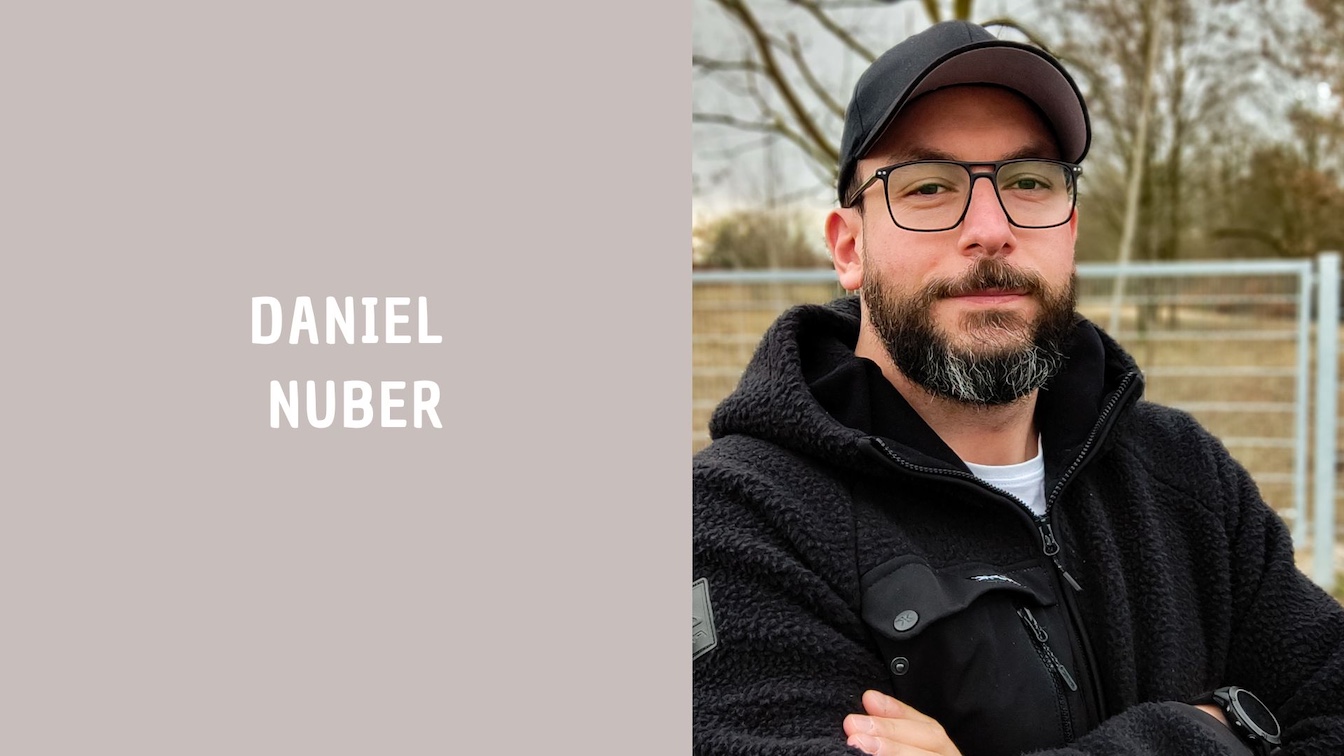
Daniel Nuber, born in 1990, is a certified specialist in the health and social services sector and is jointly responsible for the day-to-day operations of one of the largest intensive care units in Bavaria. In his private life, he is passionate about politics, history, and travel.
CLICK HERE FOR THE NEW BOOK
And they all warned. Oh, how they warned! Public broadcasters never tired of emphasizing that the AfD maintained a certain ideological affinity with the Nazi Party. Politicians from the party with the blue logo and the red arrow liked to speak of a "cult of guilt" when it came to coming to terms with the Holocaust perpetrated by Nazi Germany, in order to trivialize it. Much like the National Socialists of that era, the Alternative for Germany also prioritizes the traditional image of women and gender roles: woman, mother, child, preferably blonde and blue-eyed. Dangerous in an uncertain time, where all kinds of family constellations are possible and many a German city is paved with LGBTQ flags, which symbolize many things, but not a conservative, right-wing, or even nationalist worldview. When the media noticed that their supposed efforts to educate the public about the AfD weren't causing its popularity ratings to fall, they excluded its representatives from public discourse. No talk shows. No public events. Anyone even ideologically close to the AfD could even be banned. He lost his job and had to fight hard to get it back in court. But no moderator, no journalist, no media professional grasped that the party's publicity lay not in political appearances, but rather in every single breaking news report about a knife attack or an assault. Furthermore, new media outlets emerged online that offered politicians from the right-wing conservative spectrum a platform, and even more: there were even people who were neither journalists, politicians, nor activists, but YouTubers, who presented their own opinions on the public debate and often had more logical and coherent presentations and arguments than those from liberal, libertarian, and left-wing camps. Logical, however, does not necessarily mean true. But that doesn't interest the voter in the slightest. What the radio was in the 1930s, the internet is now, in the 2020s.
Moreover, the Russians have been trying to conquer Ukraine since 2022. The West's response has primarily been arms deliveries. People are now tired of war and even more tired of the feeling of being powerless. To be a victim. The Western media machine has offered everything in recent years: fear of a world war, fear of a nuclear war, fear of a Russia waging a war of conquest. That the Russian miThe fact that the military had to resort to museum-bought tanks after a few months - so be it. The main thing was fear. Since the European Union and the United States weren't making progress with arms deliveries, and the economic sanctions didn't bring the war to an end, the AfD proposed: The guns must fall silent so that negotiations with Putin could take place in the resulting calm. At the same time, a supposedly madman was ruling overseas. Trump, a seemingly completely irrational real estate mogul whose interests served only himself, then his country, and only secondarily the world's population, fueled nationalist ideas worldwide. Because nationalism is initially like cotton wool, which countries cuddle up to when things become uncomfortable around them and within themselves; but it is highly flammable and burns quickly, burning everything down. Nevertheless, they came. Perhaps not the nationalists we imagine, not the stern men in gray uniforms with sewn-on swastikas and lightning bolts, but rather those in fine suits, who mostly speak moderately and smile kindly. Even some women were and are involved. They are all united by the desire for separation: the dissolution of the European Union, the closing of borders, the rejection of refugee boats, and the reduction of migration from certain regions of the world. Cultivated nationalism also includes the ambition to devour other states. Trump, who wants to claim Greenland, is one example--as is the lack of response from European allies to such fantasies of omnipotence. But all of this is highbrow politics. The common people are concerned with something else: security and stability. In the last elections in 2025, the AfD came in a close second to the CDU/CSU, making it the second strongest party in Germany. Today, four years later, elections are being held again--and by all appearances, Friedrich Merz's efforts were insufficient, as the initial results show him with well over 30 percent of the vote.
June 10, 2029 "I swear that I will dedicate my strength to the well-being of the German people, increase their welfare, avert harm from them, uphold and defend the Basic Law and the laws of the Federation, conscientiously fulfill my duties, and administer justice to everyone." As with many of her public appearances, Alice Weidel wore a light-colored jacket with a tight bun for her swearing-in as Chancellor. Public and, above all, media outrage is immense following the election results. The SPD practically no longer exists. When someone mentions the Greens, they usually only mean the color. The CDU/CSU is still represented with 25 percent, but must defer to the AfD. Immediately after the election results were announced, the AfD declared a "complete realignment of policy." The internet is ecstatic, especially those so-called alternative media outlets that, in recent years, have seen the devil lurking around every corner and then depicted him in YouTube videos. Countless attacks on asylum seeker accommodations have already occurred in recent weeks. People working in refugee shelters were threatened. Schools with high percentages of migrant students were set ablaze. The first Germans have left the country, fearing a repeat of what happened with Hitler. Turkish and Arab shops are increasingly being marked with the Turkish crescent and subsequently vandalized. Vigilante groups are forming at border crossings, specifically targeting people from the Middle East. Social media is flooded with reports of dark-haired, brown-skinned individuals beating up pensioners and harassing and killing men and women of Central European appearance. These reports cannot be verified. However, they serve their purpose: those who have always wanted to express their xenophobia through violence now feel justified in doing so.
Neither Weidel nor her Deputy Chancellor and Federal Minister of Economics, Thilo Chrupalla, have seriously commented on these incidents. They claim these are oversimplified accounts and question their accuracy, as "the mainstream media tends to frame anyone as they see fit if they don't fit their worldview." Of course, a mention of the promise that public broadcasting will be abolished anyway is a must. On Markus Lanz and Sandra Maischberger's shows, the conversation immediately turns to nationalism--not with those supposedly responsible for it, but with politicians from defunct parties that have since become irrelevant. Occasionally, academics with baffling theories also appear, theories they think, write comprehensibly, but can't possibly articulate verbally in a coherent way. "This country is finished," some users comment under the videos online. "ALICE FOR GERMANY!!" is a common refrain. But the streets are...Already a battlefield. The AfD halted arms deliveries to Ukraine in record time. Putin still remains silent, but has occupied large parts of Ukraine and forced Zelensky to flee. Poland and the Baltic states are massing troops on their borders. Trump, who has managed to cling to power through political trickery, sometimes imposes 300 percent tariffs, sometimes 20 percent, sometimes none at all. Sometimes he likes Putin, sometimes he doesn't. "Alice," he told Fox News, "is such a beautiful woman. If you want to calm her down you just have to grab her by the p..." Intellectuals in Germany are speechless. In many basements, people are drinking, listening to music, and plotting the coup. Nobody believes that Germany will embark on its own campaign of conquest--the connections between the Nazi Party and the AfD don't extend that far. The rampage of fascist forces within Germany is motivation enough for leftists to call themselves resistance fighters and "do something." "When injustice becomes law," some quote Bertolt Brecht online, because they themselves are incapable of insight and complex thought processes, "resistance becomes a duty." Apart from violent brawls and clashes with the police, there is no sign of genuine resistance yet.
The only resistance coming from the business sector is business. High-ranking representatives of the business community are opposing the reintroduction of nuclear energy. They argue that these technologies have been superseded by wind and solar power, and there is no reason to return to them. The first CEOs have already vanished without a trace. Videos of them, apparently generated by AI, appear on social media, showing them carefree on vacation. "We naturally find it regrettable," says the AfD press spokesman, "that some top executives are leaving Germany without explanation and prioritizing vacation over work." And she smiles mischievously, but nothing can be proven. Meanwhile, Alice Weidel holds almost hysterically adolescent Zoom meetings with Putin, openly congratulating him on the pacification of Ukrainian territory. The opposition is furious; even the neighboring European states, now also led by right-wing conservatives, criticize the German government's benevolent stance toward Russia. Just a few weeks after taking office, the European Union is in ruins. Commission decrees are hardly implemented anymore, let alone credible agreements being reached--meetings resemble a theatrical performance. The first EU member states are closing their borders to one another, primarily because Germany is deporting and rejecting refugees in all directions. The Federal Constitutional Court cannot process cases as quickly as lawsuits are being filed.
"We gladly welcome anyone in Germany who is willing to submit to our culture and our language and contribute to the German success story," is the message from the AfD-led Foreign Ministry. "We will banish good-for-nothings, knife-wielding men, and similar types from our beautiful country without mercy." Here, too, resistance is growing from the business sector, which warns against generalizations and points to a lack of workers. "Every employee who leaves or doesn't even come in weakens our gross domestic product," they say. But nobody cares. The first YouTubers, who have long had a larger reach than established journalists, report in their vlogs about trains arriving at a fenced-off and monitored area. "Hey guys, it's like Area 51 or something," says one of them, filming himself. "There are signs everywhere and stuff, and there's a soldier who's already sent me away a few times." Signs indicating a military restricted area are indeed visible. A few meters beyond the fence, high concrete walls begin. They cannot be seen from the outside. They cannot be climbed. Nobody knows for sure, but everyone suspects what might be happening here. But the vast majority remain silent, knowing that later they will have known nothing.
August 4, 2029. Schools have changed drastically. Children with disabilities are excluded and grouped into separate classes so as not to "impair the learning progress of the other students," as the Ministry of Culture puts it. The same is happening to adolescents who speak only moderate to poor German. Many of them are no longer around. In schools in disadvantaged areas, some classes have been halved or eliminated entirely because some families have vanished without a trace. The notorious parks, such as Görlitzer Park in Berlin, are practically besieged by the police. Anyone deemed suspicious is apprehended, searched, and detained, even without evidence. How long will this continue?The timeframe varies - 24 hours, 72 hours, and even longer for rebellious suspects. Courts are already partially undermined by AfD-affiliated lawyers who turn a blind eye, sometimes even both. The Germans remain silent, as they always have been. Protest, if it occurs at all, appears online and in heated television debates that have no political consequences. Satirists attempt to ridicule the seriousness of the situation, but even they are more moderate than before the AfD's rise to power, because they know they could become one of those who suddenly disappear - it's a game of cat and mouse, allowing for fun but no criticism.
The crumbling European Union and the USA, led by an unpredictable real estate mogul, have led Japan to attack Taiwan. The Japanese government explained that Taiwan is an island that historically belongs to Japan and that it is time for what belongs together to grow together again. Trump is now flirting even more with Greenland and sending submarines to its strategic proximity. Whether these are nuclear-powered or nuclear-equipped submarines is not specified. Due to these developments, Germany is discussing its own nuclear armament - also because France and Great Britain no longer guarantee to provide nuclear protection for the German region in the event of any kind of war. "We still consider the USA our partner," says Alice Weidel, "but we have to recognize that the increasing aggression against European soil could also affect us." She added that there is no interest in a military confrontation. As before her election, Weidel and Chrupalla appear together in front of the cameras. "As mediators, we are hoping for our Russian friends, who can be of assistance in negotiations with both Japan and the USA," Chrupalla added. Russian state media are propagating the idea that Russia is assuming the role of Europe's best friend. The USA is abdicating and now showing its true imperial face, which Putin and his followers have known for decades. Cautious congratulations are coming from Sarah Wagenknecht and her alliance. Germany has finally understood who is friend and foe. Hardly anyone has been interested in the BSW for a long time now. Like most other parties, it has also vanished into oblivion.
The media landscape is also gradually changing. Broadcasting fees haven't been abolished, but suspended until further notice. Directors and journalists of public broadcasters are lamenting their plight and pointing to the Basic Law (German Constitution). Due to the ever-decreasing range of public broadcasting content, propaganda channels are dominating. People are increasingly turning to social media, where algorithms ensure they see what they want to see and not what they want to see. That's what they should be seeing. It's just that nobody notices. Although it's openly communicated that crime rates are falling--whether this is actually true or fake news cannot be independently verified--many voters are still calling for even more deportations and harsher measures, because countless short videos still focus on homicides, stabbings, and sexual offenses, tirelessly linking them to migrants. Turkish and Arab restaurants are burning across the country. Bloody clashes erupt in front of shisha bars between owners, patrons, so-called concerned citizens, and nationalists. The police are willingly turning a blind eye. On Telegram, conspiracy theorists are organizing, reinterpreting the situation: Afghanistan and Syria are deliberately sending criminals to Germany to destabilize the country. This can only be solved, they claim, by razing these countries to the ground...
Back to the year 2025. This is how some people seem to imagine the rule of the Alternative for Germany (AfD): rapid spirals of escalation, A release and self-legitimization of racist and nationalist violence, a new pro-Russian sentiment, and, of course, the expulsion and deportation of Muslims. Analogies to the Nazi seizure of power are all too readily drawn. We, too, experienced a recession, political instability, and public discontent. The AfD uses Nazi rhetoric and is dangerous because it apparently wants to overthrow the free and democratic order. Astonishing parallels are drawn to the 1930s to demonstrate how dangerous the party is--even including violent fantasies from adolescent Green Party youths who fantasize about armed violence as an instrument of resistance in podcasts. All of this, and especially the almost pathological attempt to draw analogies between our time and the time of the (auTo point out the nascent National Socialism of the past trivializes Nazi Germany and the crimes associated with it, because history does not repeat itself.
The Holocaust and the Second World War were not events that occurred overnight or spontaneously. Hatred of Jews dates back to antiquity--the mass extermination of Jews by the National Socialists was the tragic culmination of almost two thousand years of antisemitism. The Nazi regime, too, was a consequence of the preceding years, the economic crises, and the First World War. Hitler's election was a result of the Treaty of Versailles and the unstable Weimar Republic, coupled with an unemployment rate of up to almost 30 percent, incomparable to today's levels, and the associated poverty. In other words, the society that allowed the Nazi Party to emerge and become successful is not the same as the one in which we live today. In Germany, we currently have an unemployment rate of only 6.3 percent--not even a third of the 29.9 percent it was in 1929. The end of the First World War was barely 20 years in the past, and the country lost significant portions of its territory--we haven't experienced war since 1945. Around 21 percent of people living in Germany today are affected by poverty. No one should live in poverty or be affected by it, but compared to the 1930s, they are comparatively well off--back then, there was no basic income, employment counselors, or social workers. The conditions on which political parties thrive and perish are therefore different than they were a hundred years ago. Equating the AfD's ideology with that of the NSDAP and perceiving it as a similar threat to the Nazis trivializes the murder of millions of innocent people, trivializes expulsion, and trivializes a world war that had far-reaching consequences for future generations.
In our minds, the Nazi regime was the incarnation of the devil on earth. That's why it serves as a benchmark for evil--worldwide. Donald Trump and Vladimir Putin have also been compared to Hitler. These comparisons, however, lack any rational basis, and their inflationary use trivializes the National Socialists. Therefore, we should try to categorize parties and politicians according to the spirit of the times and avoid drawing historical parallels that distort or even render the debate impossible. This is also why engaging with the AfD is only moderately successful--apart from accusations of Nazism and comparisons to Adolf Hitler, there is hardly any constructive dialogue. It could certainly be argued, however, that the AfD's goals would do the country more harm than good--but for different reasons. Let's examine this more closely: The AfD wants to reintroduce the Deutsche Mark and prefers cash payments. A separate currency would not only be inconvenient due to the exchange process when traveling abroad, but it would also be economically unsound: Between 1987 and 1998, the cumulative inflation rate under the Deutsche Mark was almost 30 percent, while the euro, since its introduction, has only experienced a cumulative inflation rate of around 2 percent. A return to the Deutsche Mark would therefore have nostalgic value at best, but no economic worth. Other fanciful financial projects are also being proposed: a EUR20,000 bonus for having children, retirement after 45 years of contributions, and generous tax cuts, which together would amount to a deficit of EUR100 billion. In the long run, this would jeopardize the state budget and the financial viability of our country, especially since the party has yet to provide any verifiable answers as to how all of this would be financed--except through cuts to social welfare and reduced development aid, which alone would not be sufficient.
If we look at the handling of the increasing global digitalization and the AfD's approach to it, we see that regressive thinking is also paramount here. The party wants to restrict digitalization and prioritize citizens' privacy. On the one hand, however, digital technology and privacy are not mutually exclusive; on the other hand, a growing number of companies and citizens are voluntarily embracing modern technologies because they simplify professional and working life. It is certainly true that the flow of information must be regulated to make the misuse of information as difficult as possible. However, attempting to slow down the digitalization process itself, as a Central European and economically strong country, would set our already analog Germany back even further and would not contribute to international competitiveness.
School and vocational training also contribute to competitiveness. This is especially true for aIn a resource-poor country like ours, knowledge is capital. The Alternative for Germany (AfD) party is also rather backward-looking in this regard: inclusive classes are to be abolished; instead, children with learning disabilities are to be taught in separate classes. Far more serious than this, however, would be the party's proposed abolition of compulsory schooling. The state, they argue, can no longer reliably guarantee education, so there should be the option of homeschooling or having children educated elsewhere. The fact that there are good reasons for compulsory schooling is simply ignored: socialization, objectively verifiable education, a structured daily routine for adolescents, and yes, even verified content that is taught are important. That our school system needs reform is beyond question. However, reforms should be progressive and not destroy the achievements of recent decades. While these are, at best, foolish and backward-looking ideas, there is no trace of National Socialism or Hitler anywhere to be seen.
The situation is somewhat different when it comes to migration and asylum policy. First of all: There is no explicit talk of extermination or expulsion of specific groups of people here. However, the AfD makes no secret of the fact that it would prefer not to have people from Muslim cultural backgrounds in Germany and, above all, wants to deport asylum seekers and migrants who have committed crimes as quickly as possible. Ever since former Federal President Christian Wulff said that Islam belongs to Germany, there have been ongoing discussions about whether this is actually the case. In 2016, the AfD included the statement in its party platform: "Islam does not belong to Germany," thus clearly positioning itself against Wulff and Islam as part of the Federal Republic. Years later, it adopted the term "remigration," which could certainly be meant as a synonym for deportation--not to concentration camps, but to the countries of origin of the (deportable) migrants and asylum seekers. Here, drawing a line between racism and the legitimate application of the law becomes more difficult because the focus isn't simply on the legal situation and its enforcement, but rather on inciting hatred against certain minorities by defaming migrants as "welfare-supported knife-wielding men" and "headscarf-wearing girls." It is understandable and correct that those who do not have the right to remain in Germany must leave. Naturally, this must be enforced; otherwise, the right to asylum and residency is a farce--those who can stay anyway don't need to apply if the outcome has no consequences. The problem here is that the AfD's platform openly adopts racist worldviews--just not with the same harsh and offensive language used by the National Socialists, but enough to regularly face accusations of incitement to hatred.
It is understandable and correct that those who do not have the right to remain in Germany must leave. The AfD party platform states that the party is committed to "German guiding culture" and views the ideology of multiculturalism as a serious threat to social peace and the continued existence of the nation as a cultural unit. The German state and civil societies must "confidently defend" German cultural identity. But what does this mean? First, a clear dividing line is drawn between German and all other cultures. What the Nazis considered the blond, blue-eyed German, the AfD defines as anyone who exhibits German cultural characteristics. Multiculturalism poses a threat to the continued existence of cultural "national unity," the party states. In other words, the German, who is now identifiable not by external but by cultural characteristics, is part of a German-cultural mass within the nation, which is to remain just that. Any other cultural influences not only endanger this homogeneity, but also worsen it. With this, the party abandons the constitutional principle that all people are equal and thus violates the Basic Law. Unlike the NSDAP, it no longer defines the German as a race, but rather as a cultural nation that is evidently superior to others; that it is superior to others, in its view, can be deduced from the feared deterioration and abolition of German national culture through multiculturalism. Combined with the harsh rhetoric, the explicit and recurring mention of Islam in the party platform, which it claims does not belong to Germany, and the inflammatory public appearances, it still cannot be said that Muslims In Germany, she fears for her life if the AfD comes to power.n would have to. It is conceivable, however, that these seemingly innocuous descriptions of national identity and the attacks on it could, in the long run, pave the way for a corresponding "counterattack" against Muslims or other influential cultures that the AfD perceives as enemies.
In light of Germany's historical responsibility, such a party should be considered unelectable--even if all its other points were reasonable and correct. Due to its own history, Germany is the leading expert on genocide and racism, yet voters remain oblivious to the danger, which is both obvious and hidden between the lines. The fact that most people do not engage deeply with the Alternative for Germany or any other party is certainly part of the explanation for its success in the last federal election. Perhaps, however, part of the truth is that the belief in being better, stronger, more intelligent, and more valuable than everyone else in the world is still part of German identity. After all, the party's other political ideas are likely unknown. Few of its voters will have asked themselves how The AfD's platform is unclear on how it intends to deal with children with learning disabilities in schools, what the consequences of reintroducing the D-Market would be, or how it envisions digitalization. The mere highlighting and denigrating of non-Germans, non-Europeans, and especially Muslims residing in Germany led to its becoming the second-strongest party in the last federal election. This says more about the "cultural German" than about the party itself.
Undoubtedly, Europe is indeed facing a growing problem with (deportable) asylum seekers from North Africa and the Middle East who are resorting to violence. Just a few weeks ago, riots broke out in Spain after North Africans brutally beat a Spanish pensioner, leaving him hospitalized, for no apparent reason. In response, Spaniards gathered and attacked people of North African appearance across the country. Recently, a Syrian man was stabbed by a Kenyan man in Klagenfurt, Austria. Such reports have been increasing for months. This fosters a sense of insecurity, which can even be objectively verified by police crime statistics. Germany lacks an answer to this. We prefer to discuss everything that doesn't work instead of developing and testing concepts that might work - this leads to the rise of the AfD, the only party not only offering a solution, but one that is quite familiar to Germans: deportation. Or, in modern parlance: remigration.
Other European countries are already further along in their solutions. Denmark dissolves its neighborhoods when the percentage of migrants exceeds 30 percent. Asylum seekers required to leave the country are held in a reception center near Copenhagen. Poland protects its borders, and thus the external borders of the EU, with force. Hungary now pays a daily fine of EUR1 million to the EU because it refuses to accept asylum seekers - but, and this is the sad truth, it has no problems with rising crime. The mood in the EU is shifting. The initial culture of welcome, when Europeans stood at train stations with teddy bears and welcome signs to greet refugees, is transforming into a culture of farewell. With the new German federal government, this shift in sentiment is gradually becoming noticeable in the local political landscape. Under Friedrich Merz, payments to sea rescue operations were discontinued, and deportations appear to be more frequent, including to Afghanistan, something that was not possible under Olaf Scholz. Compared to the measures taken by our EU neighbors, these are minor issues. It remains to be hoped that the Merz government has grasped the long-term consequences of inadequate action--not only in terms of security policy, if insufficient measures are taken to combat the rising crime rate, but also in terms of party politics, if forces come to power that know no middle ground but only extremes. However, this does not mean that the AfD, in its current form, gives the impression of harboring anything remotely resembling the Nazi Party. She espouses a racist worldview, which she sells as culture; she perceives the "German cultural nation" as superior; and she has an obvious problem with migrants, yet nothing currently suggests that she intends genocide or similar atrocities--though she does intend mass deportations and the isolation of the country.
That the coalition government is responding to the rising crime rate and, in particular, the growing sense of insecurity among the population...The fact that the government stood idly by until the very end now vindicates the AfD's position. Just a few days ago, they submitted a parliamentary inquiry to the federal government regarding crimes at German main train stations. Unfortunately, this also proves that there's some truth to Alice Weidel's claims in the Bundestag about "welfare-supported knife-wielding men": Just as in the police crime statistics months ago, Afghans, Syrians, and individuals whose nationality could not be determined are overrepresented here as well--not only in knife attacks, but also in sexual and property crimes. There is a statistically significant problem with crime committed by non-Germans that urgently needs to be addressed by those who can think rationally, whose platforms contain neither hatred, incitement, nor nationalism, and who understand that isolation and regression alone will not be the answer.
Besides the rising crime rates and the feeling of insecurity, there's another source of ammunition for the AfD: the Left Party. While the general European climate is becoming increasingly conservative to right-wing, the Left Party is relentlessly demanding more migration, fewer deportations, and talking about expropriation and other undemocratic ideas. For example, Ines Schwerdtner from the Left Party was a guest on the podcast "Young & Naive," where she asked... The question was raised whether it might be a good idea to make food freely available to everyone, which would amount to expropriating supermarkets. The answer was: That's an interesting idea and perhaps not so bad. Of course, the discussion also touched on expropriating housing cooperatives, raising taxes on the wealthy, and introducing "socialist democracy," whatever that means. Naturally, this is also undemocratic nonsense, but especially considering that Europe is currently grappling with its own identity, crime, and migration, and is becoming more conservative--as is Germany itself--this sounds to many (including me) like: missing the point. There's no real insight. Added to this are similarly populist rhetoric to that used by the AfD. While the AfD considers the "German cultural nation" to be worth preserving and defending, thereby elevating itself above other cultures and nations, leftists refuse to sing the national anthem or simply can't relate to Germany. One is an idealization of one's own origins, the other is violence against oneself. How about: Dare to be a little more rational and a little more moderate?
August 18, 2025
©Daniel Nuber
Daniel Nuber, born in 1990, is a certified specialist in the health and social services sector and is jointly responsible for the day-to-day operations of one of the largest intensive care units in Bavaria. In his private life, he is passionate about politics, history, and travel.
CLICK HERE FOR THE NEW BOOK
Write a comment