Do you want total war?
Propaganda has never been so cheap, so fast, and so effective as it is today. While the Third Reich required an entire propaganda ministry, today a smartphone suffices. Looking at the current media and political landscape and what is being propagated within it, we cannot avoid asking: Do we want war?
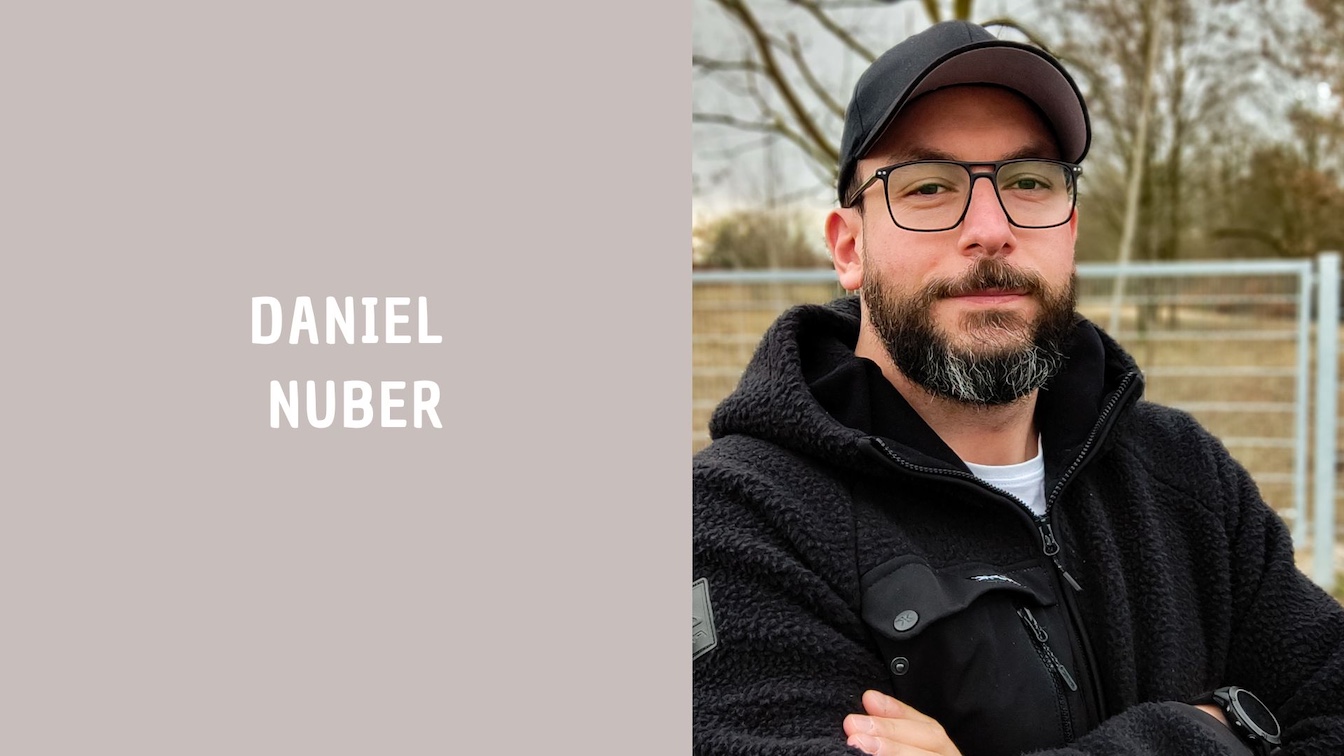
By Daniel Nuber
By Daniel Nuber
Edward Bernays created a masterful guide to propaganda in 1928 with his book "Propaganda." In it, he describes in detail how the masses can be manipulated. First and foremost, deep-seated emotions must be appealed to, not facts--fears, anxieties, the desire for physical and mental well-being, and the sense of belonging. The mechanisms described by Bernays were later also used in the Nazi propaganda machine. The Nazis adopted significant elements of it to incite hatred against Jews, dissidents, and people who, for other reasons, did not fit into the Aryan worldview. After the end of the Second World War, the term "propaganda" therefore acquired negative connotations. Note: the term. Propaganda itself never ceased. In the West, we now call propaganda produced by the West advertising, marketing, public relations, or information campaigns. In and of itself, replacing the now negatively charged term "propaganda" is also propaganda; after all, someone wants to make you believe that you are no longer being manipulated for a specific purpose, thus making you easier to manipulate. can.
For many decades, we have been predominantly manipulated by economic propaganda. Cigarette manufacturers, for example, used paid studies to claim that tobacco consumption was beneficial to our health. The manufacturer of a well-known chocolate spread also led us to believe that it, like cornflakes, was an essential part of a good, balanced breakfast. Of course, the manufacturer conveniently omitted the fact that it's essentially just a slop made of sugar, cheap fat, and flavor enhancers, which should at best be eaten occasionally and certainly not all the time. And the customer buys it. Because they think it's part of breakfast.
Now, propaganda doesn't stop at drugs or food. One business has always overshadowed all others: war. In recent years, a considerable and, above all, frightening propaganda machine has emerged, the scale of which Nazi Propaganda Minister Goebbels could only have dreamed of. While it used to take many millions of dollars to have Tom Cruise play a heroic pilot in Top Gun, which alone could boost support for the US military and increase recruitment numbers, Today, all you need is an internet-enabled device. Material is everywhere - from past and present wars, and now also generated by AI. Effective propagandists mix real and fabricated content, creating virtual crises that don't actually exist, and thus manipulating people into either making these invented wars a reality or at least willingly participating in them. In Germany, it seems, we are gradually developing a renewed appetite for war.
This is the only way to explain the rampant war and military propaganda. Ever since Defense Minister Pistorius declared that the Bundeswehr (German Armed Forces) needed to become "war-ready" again, the signs have pointed to increasing the German people's readiness for war - sometimes more, sometimes less overtly. The war propaganda show hosted by Markus Lanz on March 4, 2026, was a particularly blatant example. In the discussion, the three pro-militarists Marius Lange, Kerry Hoppe, and Léocadie Reimers attacked the only pacifist in the group, Ole Nymoen, attempting to explain to him, and especially to the audience, that war wasn't actually so bad. Nymoen countered that he would try to flee if a military conflict broke out in Germany and that he was not prepared to die for Germany. This provoked resistance from the other participants. When Nymoen was asked where his aversion to war came from, given that he had never participated in one, he referred to films, books, and stories, and was laughed at for it.
Interestingly, none of the other three had ever been to war. Marius Lange is a minor and hasn't even completed his compulsory military service. The two women did, after all, train with the German Armed Forces, but immediately afterwards they took jobs elsewhere - one is a lawyer, the other works for a drone company (a cynic might suspect lobbying interests here). So, these two women can't be all that convinced by the German Armed Forces. Perhaps they're also aware that war outside the training grounds is anything but glamorous.
Trambling through the woods during an exercise and pretending the troops are under fire is exactly that: pretending. Driving through a foreign country with comrades, being fired upon, and having to fire yourself, all while wondering about the mission's purpose and sustainability, is a completely different ballgame.r. Now, we mustn't pretend that the Bundeswehr is purely a defensive army. It was conceived as such, and that's how it's marketed, but Germany has participated in several wars in the past that served neither defense nor significantly improved the quality of life in the affected countries. We recall the myth of defending democracy in the Middle East, or deployments in Africa that would even have made sense for the local population to end genocides--but that would have required a mandate, which didn't exist. So the Germans were there to watch. Perhaps this was because Africa is known for many things, but certainly not for rich oil reserves or important trade routes.
So, being a soldier seems rather unsatisfying across the board. Now, I'm aware that a country urgently needs an army to exert a deterrent effect and to be able to defend itself. I also considered, and still consider, the associated compulsory military service to be the right thing to do; Not only to strengthen the Bundeswehr (as a defense instrument), but also to support the health and social services through alternative civilian service. Many people first came to nursing or emergency medical services through their civilian service, discovered a passion for it, and stayed. However, it must be clear that those who might even choose to enlist in the Bundeswehr do not become pawns, deployed not only for national defense but also to drop bombs of democracy in third countries--with completely unforeseeable consequences for Europe.
I no longer see this clarity--quite the contrary. It is becoming increasingly clear where this is all headed. The fact that Pistorius openly speaks of "war readiness" and no longer of "military readiness," and--even more tellingly--encounters virtually no opposition, is a sign of things to come. Added to this are propaganda programs like Lanz's, which spread propaganda about Russia supposedly attacking us in the coming years--completely ignoring the fact that the Russians are barely making any progress in Ukraine, a country whose military strength is in no way comparable to that of the EU/NATO--and finally, self-made propaganda from people whose actions are the result of their own undetected consumption of propaganda.
The consequences are real. Feel free to watch a war video or two on social media--the algorithm will quickly bombard you with them. You'll soon believe that soldiers are lurking around every corner and that we're on the verge of total escalation. The more of this you discover, the more this conviction takes hold, and the more convinced you become, the greater the likelihood that you yourself will feel compelled to do something. This could mean that you start to approve of military interventions--or that you advocate for establishing democracy in non-democratic countries. Or you might come up with entirely different, outlandish ideas.
The consequences are real. Have you ever wondered why Greta Thunberg and her followers decided to send their "terror flotilla" to Gaza to deliver three cans of ravioli and five liters of water? The answer is propaganda. They've been so brainwashed by social media that they actually believed they could enter a war zone unhindered, make a difference with their tiny delivery, and that the world's power brokers would genuinely care. It's a lack of rationality beyond words. The act itself is also propaganda, because the staging of the entire trip, in turn, encouraged others to drift further into antisemitism and conspiracy theories, which then generate their own propaganda. A vicious cycle.
A logical consequence of this increasingly brainwashed population is its infiltration into politics, though that's a classic chicken-and-egg situation. The coarsening of society across Europe is leading to tension and a willingness to use violence, which also influences voting behavior. This benefits those who can read the signs of the times--those who preach radicalism instead of moderation, who want war instead of peace, who seek problems instead of developing solutions. This is why populist and radical parties are on the rise in Europe. They have understood that older voters are frightened and therefore easily manipulated, and that younger voters, thanks to social media, can be constantly bombarded with disaster scenarios, wars, and injustices, while populists simultaneously offer simple solutions to complex problems. Historically, economic uncertainty has rarely been a coincidence in the run-up to conferences.Not only do they like it, but they often provide fertile ground for it. The German economy is shrinking, money is losing value, and goods are becoming increasingly expensive. The follies of our big brother, who is up to whatever in Iran, leading to even higher prices and shortages, only exacerbate the situation.
The German government's responses to the overall domestic situation suggest, at best, that the population is being prepared for war. The rising inflation is being met with discussions about tax increases and massive cuts to social benefits, which amounts to nothing less than further diminishing the purchasing power of those already facing existential worries due to the economic situation and whose purchasing power is dwindling. History tells us that a key factor in the outbreak of wars is a lack of prospects - when, especially for men, no longer see any future in their homeland, the likelihood of starting or at least supporting a war increases. Despite all the justified criticism of capitalism, purchasing power and prosperity are guarantors of peace.
Artificially reducing the population's purchasing power through additional burdens and cuts, while simultaneously massively recruiting for the military, stoking fears of the almost historical enemy Russia, and repeatedly insinuating through propaganda that war isn't really so bad, is a frightening situation.
As I write this, it has come to light that the German government has inserted a crucial sentence into the Conscription Act:
"Male persons must obtain permission from the responsible career center of the Bundeswehr after reaching the age of 17 if they intend to leave the Federal Republic of Germany for more than three months (...)." "The Ministry of Defense stated that approval would generally be granted until conscription is reinstated. However, what must be granted can also be denied. Previously, approval was only required in times of tension or national defense.
To summarize all these observations and pieces of information, it seems as if they all lead to a crucial question, one that Goebbels once posed and that we never wanted to ask again:
Do you want total war?
April 9, 2026
©Daniel Nuber
In his book "Rust, Weed, and Rakija," Daniel Nuber describes his journey through the Balkans. He is also a certified specialist in the health and social services sector and works as an author, videographer, and photographer.
CLICK HERE FOR THE NEW BOOK
For many decades, we have been predominantly manipulated by economic propaganda. Cigarette manufacturers, for example, used paid studies to claim that tobacco consumption was beneficial to our health. The manufacturer of a well-known chocolate spread also led us to believe that it, like cornflakes, was an essential part of a good, balanced breakfast. Of course, the manufacturer conveniently omitted the fact that it's essentially just a slop made of sugar, cheap fat, and flavor enhancers, which should at best be eaten occasionally and certainly not all the time. And the customer buys it. Because they think it's part of breakfast.
Now, propaganda doesn't stop at drugs or food. One business has always overshadowed all others: war. In recent years, a considerable and, above all, frightening propaganda machine has emerged, the scale of which Nazi Propaganda Minister Goebbels could only have dreamed of. While it used to take many millions of dollars to have Tom Cruise play a heroic pilot in Top Gun, which alone could boost support for the US military and increase recruitment numbers, Today, all you need is an internet-enabled device. Material is everywhere - from past and present wars, and now also generated by AI. Effective propagandists mix real and fabricated content, creating virtual crises that don't actually exist, and thus manipulating people into either making these invented wars a reality or at least willingly participating in them. In Germany, it seems, we are gradually developing a renewed appetite for war.
This is the only way to explain the rampant war and military propaganda. Ever since Defense Minister Pistorius declared that the Bundeswehr (German Armed Forces) needed to become "war-ready" again, the signs have pointed to increasing the German people's readiness for war - sometimes more, sometimes less overtly. The war propaganda show hosted by Markus Lanz on March 4, 2026, was a particularly blatant example. In the discussion, the three pro-militarists Marius Lange, Kerry Hoppe, and Léocadie Reimers attacked the only pacifist in the group, Ole Nymoen, attempting to explain to him, and especially to the audience, that war wasn't actually so bad. Nymoen countered that he would try to flee if a military conflict broke out in Germany and that he was not prepared to die for Germany. This provoked resistance from the other participants. When Nymoen was asked where his aversion to war came from, given that he had never participated in one, he referred to films, books, and stories, and was laughed at for it.
Interestingly, none of the other three had ever been to war. Marius Lange is a minor and hasn't even completed his compulsory military service. The two women did, after all, train with the German Armed Forces, but immediately afterwards they took jobs elsewhere - one is a lawyer, the other works for a drone company (a cynic might suspect lobbying interests here). So, these two women can't be all that convinced by the German Armed Forces. Perhaps they're also aware that war outside the training grounds is anything but glamorous.
Trambling through the woods during an exercise and pretending the troops are under fire is exactly that: pretending. Driving through a foreign country with comrades, being fired upon, and having to fire yourself, all while wondering about the mission's purpose and sustainability, is a completely different ballgame.r. Now, we mustn't pretend that the Bundeswehr is purely a defensive army. It was conceived as such, and that's how it's marketed, but Germany has participated in several wars in the past that served neither defense nor significantly improved the quality of life in the affected countries. We recall the myth of defending democracy in the Middle East, or deployments in Africa that would even have made sense for the local population to end genocides--but that would have required a mandate, which didn't exist. So the Germans were there to watch. Perhaps this was because Africa is known for many things, but certainly not for rich oil reserves or important trade routes.
So, being a soldier seems rather unsatisfying across the board. Now, I'm aware that a country urgently needs an army to exert a deterrent effect and to be able to defend itself. I also considered, and still consider, the associated compulsory military service to be the right thing to do; Not only to strengthen the Bundeswehr (as a defense instrument), but also to support the health and social services through alternative civilian service. Many people first came to nursing or emergency medical services through their civilian service, discovered a passion for it, and stayed. However, it must be clear that those who might even choose to enlist in the Bundeswehr do not become pawns, deployed not only for national defense but also to drop bombs of democracy in third countries--with completely unforeseeable consequences for Europe.
I no longer see this clarity--quite the contrary. It is becoming increasingly clear where this is all headed. The fact that Pistorius openly speaks of "war readiness" and no longer of "military readiness," and--even more tellingly--encounters virtually no opposition, is a sign of things to come. Added to this are propaganda programs like Lanz's, which spread propaganda about Russia supposedly attacking us in the coming years--completely ignoring the fact that the Russians are barely making any progress in Ukraine, a country whose military strength is in no way comparable to that of the EU/NATO--and finally, self-made propaganda from people whose actions are the result of their own undetected consumption of propaganda.
The consequences are real. Feel free to watch a war video or two on social media--the algorithm will quickly bombard you with them. You'll soon believe that soldiers are lurking around every corner and that we're on the verge of total escalation. The more of this you discover, the more this conviction takes hold, and the more convinced you become, the greater the likelihood that you yourself will feel compelled to do something. This could mean that you start to approve of military interventions--or that you advocate for establishing democracy in non-democratic countries. Or you might come up with entirely different, outlandish ideas.
The consequences are real. Have you ever wondered why Greta Thunberg and her followers decided to send their "terror flotilla" to Gaza to deliver three cans of ravioli and five liters of water? The answer is propaganda. They've been so brainwashed by social media that they actually believed they could enter a war zone unhindered, make a difference with their tiny delivery, and that the world's power brokers would genuinely care. It's a lack of rationality beyond words. The act itself is also propaganda, because the staging of the entire trip, in turn, encouraged others to drift further into antisemitism and conspiracy theories, which then generate their own propaganda. A vicious cycle.
A logical consequence of this increasingly brainwashed population is its infiltration into politics, though that's a classic chicken-and-egg situation. The coarsening of society across Europe is leading to tension and a willingness to use violence, which also influences voting behavior. This benefits those who can read the signs of the times--those who preach radicalism instead of moderation, who want war instead of peace, who seek problems instead of developing solutions. This is why populist and radical parties are on the rise in Europe. They have understood that older voters are frightened and therefore easily manipulated, and that younger voters, thanks to social media, can be constantly bombarded with disaster scenarios, wars, and injustices, while populists simultaneously offer simple solutions to complex problems. Historically, economic uncertainty has rarely been a coincidence in the run-up to conferences.Not only do they like it, but they often provide fertile ground for it. The German economy is shrinking, money is losing value, and goods are becoming increasingly expensive. The follies of our big brother, who is up to whatever in Iran, leading to even higher prices and shortages, only exacerbate the situation.
The German government's responses to the overall domestic situation suggest, at best, that the population is being prepared for war. The rising inflation is being met with discussions about tax increases and massive cuts to social benefits, which amounts to nothing less than further diminishing the purchasing power of those already facing existential worries due to the economic situation and whose purchasing power is dwindling. History tells us that a key factor in the outbreak of wars is a lack of prospects - when, especially for men, no longer see any future in their homeland, the likelihood of starting or at least supporting a war increases. Despite all the justified criticism of capitalism, purchasing power and prosperity are guarantors of peace.
Artificially reducing the population's purchasing power through additional burdens and cuts, while simultaneously massively recruiting for the military, stoking fears of the almost historical enemy Russia, and repeatedly insinuating through propaganda that war isn't really so bad, is a frightening situation.
As I write this, it has come to light that the German government has inserted a crucial sentence into the Conscription Act:
"Male persons must obtain permission from the responsible career center of the Bundeswehr after reaching the age of 17 if they intend to leave the Federal Republic of Germany for more than three months (...)." "The Ministry of Defense stated that approval would generally be granted until conscription is reinstated. However, what must be granted can also be denied. Previously, approval was only required in times of tension or national defense.
To summarize all these observations and pieces of information, it seems as if they all lead to a crucial question, one that Goebbels once posed and that we never wanted to ask again:
Do you want total war?
April 9, 2026
©Daniel Nuber
In his book "Rust, Weed, and Rakija," Daniel Nuber describes his journey through the Balkans. He is also a certified specialist in the health and social services sector and works as an author, videographer, and photographer.
CLICK HERE FOR THE NEW BOOK
Write a comment