Generation Tattoo
In my childhood, tattoos were either for sailors, convicts, or indigenous people. Period. But there was also always something tacky about getting some kind of design tattooed on you, something meant to outwardly show which birthdate was important to you, which person you loved, or which event had shaped your life.
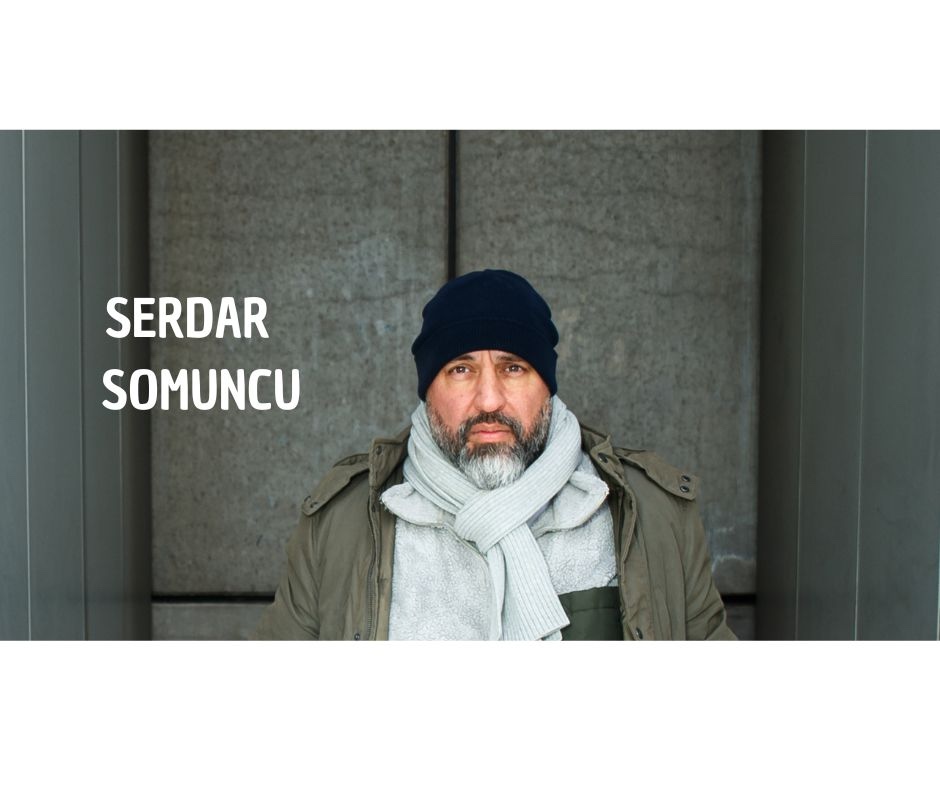
By Serdar Somuncu
By Serdar Somuncu
It certainly didn't play a major role back then. People noticed it, maybe glanced at it briefly, and that was that.
Nowadays, however, we live in a society where it feels like the majority of people have some kind of disfigurement on their bodies, meant to outwardly demonstrate how individual they feel or how much they differentiate themselves from others who walk around without tattoos.
And it's actually even worse than when I was a child. Because I find it even more tacky today to see the aesthetic standards people apply to themselves and their surroundings. It's almost become a plague.
There have been different phases of this tattoo mania. From the well-known tramp stamps to Chinese characters whose meaning probably half of their wearers don't even know, to tribal designs, skulls, and roses, all the way to large-scale, kitschy images of prophets, angels, and religious figures. Add to that wolves, lions, snakes, spiders, scorpions, clocks without hands, compasses for people who clearly still don't know where they're going, and words of wisdom in cursive script that look like a grumpy elementary school student scrawled them on skin with a marker.
And because apparently even the last free square centimeter on arms, legs, and back was eventually used up, now it's the face's turn. A face tattoo used to be a pretty reliable indicator that you either belonged to a very specific subculture or had taken an interesting detour in your life planning. Today it's a lifestyle statement. Small inscriptions on the temples, symbols under the eyes, stars, crosses, numbers, teardrops, or any number of markings that look like someone kept sewing during a power outage.
And then there are the obligatory piercings. Through the nose, eyebrow, lip, tongue, navel, or nipples, as you'd choose. Some people now look as if they accidentally dragged their faces through the hardware aisle during an internship at a home improvement store. You can't even tell if you're encountering a person or the final exam of a dominatrix course. Metal everywhere: rings, rods, chains, and small beads. All that's missing is someone standing next to you asking if you'd like to book an appointment for the torture rack.
Walking through a German city center in the summer now feels like being subjected to a panorama of tastelessness and involuntarily witnessing creative self-mutilation.
And perhaps there's more truth in that word than you might initially think: self-mutilation.
Of course, not everyone who gets a tattoo is mentally disturbed, and it would be absurd to draw a diagnosis from every rose on a forearm. But as a cultural phenomenon, there's definitely something self-destructive about it. People voluntarily inflict pain on themselves, injure their skin, repeatedly insert needles into their bodies, and then declare the result an expression of their personality.
The pain is even part of the process. It's paid for, endured, and often recounted afterward with a certain pride. "That took eight hours." "Those ribs were hell." "It was brutal on my neck." Sometimes it sounds less like a visit to the tattoo artist and more like the account of a successfully completed dare.
Perhaps that's precisely part of the fascination: pain is transformed into meaning.
An injury becomes a symbol.
A scar becomes a statement.
One's own body becomes material.
And with that, a second element comes into play: exhibitionism.
Not in the clinical sense, but in the everyday sense. The desire to show something of oneself. The body becomes an exhibition space. What was once private--grief, love, sexuality, family history, religious conviction, memories--is brought outward and made visible.
The inner self acquires an outer facade.
I love my mother--so I got her birthdate tattooed on my forearm.
I survived a difficult time--so I got a phoenix on my back.
I am spiritual--so I got Buddha, a cross, a mandala, or Sanskrit.
I am dangerous--so I got a wolf, a tiger, or a skull.
I am free--so I got birds made from a feather. flying.
The psyche becomes a clipart catalog.
And here, self-harm meets exhibitionism, and both ultimately encounter kitsch.
For kitsch often arises precisely where profound emotions are forced into the most unambiguous symbols possible. Love becomes a heart. Freedom becomes a bird. Strength becomes a lion. Transience becomes an hourglass. Family becomes a tree. Death becomes a skull.
Nothing remains ambiguous.
Nothing can remain secret.
Everything must be illustrated.
The interesting thing is that...These people often perceive themselves as particularly individual. Yet they use a repertoire of images that are reproduced millions of times. The same wolf, the same compass, the same rose, the same Roman numerals, the same wings, the same maxims.
Individuality from a catalog.
What's most astonishing, of course, is that almost every tattooed person believes their tattoo is something special.
"It has a very personal meaning."
Of course.
The children's birth dates. The coordinates of Ibiza. The paw print of a deceased dog. "Carpe Diem." "Family." A feather from which birds fly. A forest in front of a mountain. A lion with blue eyes. An anchor.
All, of course, completely unique.
And therein lies perhaps the true phenomenon of our time. Individuality is becoming mass-produced.
You go to someone, leaf through templates, choose a symbol from a globally used visual language, and then pay several hundred or even thousands of euros to have it certified that you are distinctive.
This is somewhat reminiscent of people who buy the same SUV as everyone else and then slap a "Personalized" sticker on it.
In the past, a tattoo was at least a sign of distinction. Those who were tattooed actually signaled something: belonging to a particular group, rebellion, being an outsider, perhaps even criminality or a life at sea. You could like it or dislike it, but it carried a social code.
Today, the social code is more like this: I go to the gym, eat avocados, have a full beard, wear EUR250 sneakers, and have "Only God Can Judge Me" tattooed on my forearm.
The revolutionary aspect of this is rather limited.
What was once a rebellion has become a lifestyle product.
And this isn't just true for tattoos anymore. We live in an era where people constantly feel the need to make their self-image visible. Clothing, bodies, Instagram profiles, political statements, diets, sexual identities, cars, vacation spots--everything becomes a public showcase of one's personality.
The tattoo is perhaps just the most permanent form of this.
The body becomes a billboard for the self.
People no longer carry their memories in their heads, but on their forearms. Their feelings are no longer inside, but above their collarbones. Their philosophy of life is no longer expressed in their actions, but on their ribs.
Perhaps that's precisely what's so strange about it.
Because if an experience is truly important, why does it have to be visible? A tattoo on my skin?
I've loved people, too. I've lost people. I've had children, buried friends, traveled to cities, celebrated successes, experienced defeats, suffered, changed, and understood things.
Nevertheless, I don't need a dolphin on my calf for that.
That doesn't mean no one is allowed to find tattoos beautiful. Everyone can do what they want with their body. They can pierce it, paint it, write on it, inflate it, suck on it, or, for all I care, inscribe it with the entire text of the Basic Law.
But you're equally entitled to look at the result and say: That looks awful.
This strange notion that every form of physical self-expression must automatically be respected, found interesting, or aesthetically valuable is, in any case, one of the odder achievements of our time.
No.
Taste is taste.
And ugliness doesn't become more beautiful just because it has a story.
Perhaps that's why the tattoo generation isn't actually as rebellious as it thinks it is. Perhaps it's more a generation that Pain, self-expression, and kitsch have been reconciled.
You get a little hurt.
You show a lot of yourself.
And you call the whole thing personality.
So maybe at some point exactly what happens with every fashion trend will happen. The tattoo generation will age. The lions will get wrinkled. The Chinese characters will slowly migrate down to the knees. The majestic eagle will eventually become a grumpy chicken, and the tattooed phrase "Forever Young" will take on a whole new level of humor at 78.
And maybe then, somewhere, a few twenty-somethings will be sitting in a café completely unpainted.
No tattoos. No piercings. No lettering.
Just skin.
And their parents will ask them in horror:
"Don't you want to make anything of yourself?"
And the kids will answer:
"Yes. That's why I'm leaving it like this."
Perhaps that would then be the last possible form of rebellion:
simply not putting anything on yourself.
16.09.26
©Serdar Somuncu
"The new book - Lies - A Cultural History of a Human Weakness"
*Serdar Somuncu is an actor and directord director
LINK TO THE NEW BOOK
Nowadays, however, we live in a society where it feels like the majority of people have some kind of disfigurement on their bodies, meant to outwardly demonstrate how individual they feel or how much they differentiate themselves from others who walk around without tattoos.
And it's actually even worse than when I was a child. Because I find it even more tacky today to see the aesthetic standards people apply to themselves and their surroundings. It's almost become a plague.
There have been different phases of this tattoo mania. From the well-known tramp stamps to Chinese characters whose meaning probably half of their wearers don't even know, to tribal designs, skulls, and roses, all the way to large-scale, kitschy images of prophets, angels, and religious figures. Add to that wolves, lions, snakes, spiders, scorpions, clocks without hands, compasses for people who clearly still don't know where they're going, and words of wisdom in cursive script that look like a grumpy elementary school student scrawled them on skin with a marker.
And because apparently even the last free square centimeter on arms, legs, and back was eventually used up, now it's the face's turn. A face tattoo used to be a pretty reliable indicator that you either belonged to a very specific subculture or had taken an interesting detour in your life planning. Today it's a lifestyle statement. Small inscriptions on the temples, symbols under the eyes, stars, crosses, numbers, teardrops, or any number of markings that look like someone kept sewing during a power outage.
And then there are the obligatory piercings. Through the nose, eyebrow, lip, tongue, navel, or nipples, as you'd choose. Some people now look as if they accidentally dragged their faces through the hardware aisle during an internship at a home improvement store. You can't even tell if you're encountering a person or the final exam of a dominatrix course. Metal everywhere: rings, rods, chains, and small beads. All that's missing is someone standing next to you asking if you'd like to book an appointment for the torture rack.
Walking through a German city center in the summer now feels like being subjected to a panorama of tastelessness and involuntarily witnessing creative self-mutilation.
And perhaps there's more truth in that word than you might initially think: self-mutilation.
Of course, not everyone who gets a tattoo is mentally disturbed, and it would be absurd to draw a diagnosis from every rose on a forearm. But as a cultural phenomenon, there's definitely something self-destructive about it. People voluntarily inflict pain on themselves, injure their skin, repeatedly insert needles into their bodies, and then declare the result an expression of their personality.
The pain is even part of the process. It's paid for, endured, and often recounted afterward with a certain pride. "That took eight hours." "Those ribs were hell." "It was brutal on my neck." Sometimes it sounds less like a visit to the tattoo artist and more like the account of a successfully completed dare.
Perhaps that's precisely part of the fascination: pain is transformed into meaning.
An injury becomes a symbol.
A scar becomes a statement.
One's own body becomes material.
And with that, a second element comes into play: exhibitionism.
Not in the clinical sense, but in the everyday sense. The desire to show something of oneself. The body becomes an exhibition space. What was once private--grief, love, sexuality, family history, religious conviction, memories--is brought outward and made visible.
The inner self acquires an outer facade.
I love my mother--so I got her birthdate tattooed on my forearm.
I survived a difficult time--so I got a phoenix on my back.
I am spiritual--so I got Buddha, a cross, a mandala, or Sanskrit.
I am dangerous--so I got a wolf, a tiger, or a skull.
I am free--so I got birds made from a feather. flying.
The psyche becomes a clipart catalog.
And here, self-harm meets exhibitionism, and both ultimately encounter kitsch.
For kitsch often arises precisely where profound emotions are forced into the most unambiguous symbols possible. Love becomes a heart. Freedom becomes a bird. Strength becomes a lion. Transience becomes an hourglass. Family becomes a tree. Death becomes a skull.
Nothing remains ambiguous.
Nothing can remain secret.
Everything must be illustrated.
The interesting thing is that...These people often perceive themselves as particularly individual. Yet they use a repertoire of images that are reproduced millions of times. The same wolf, the same compass, the same rose, the same Roman numerals, the same wings, the same maxims.
Individuality from a catalog.
What's most astonishing, of course, is that almost every tattooed person believes their tattoo is something special.
"It has a very personal meaning."
Of course.
The children's birth dates. The coordinates of Ibiza. The paw print of a deceased dog. "Carpe Diem." "Family." A feather from which birds fly. A forest in front of a mountain. A lion with blue eyes. An anchor.
All, of course, completely unique.
And therein lies perhaps the true phenomenon of our time. Individuality is becoming mass-produced.
You go to someone, leaf through templates, choose a symbol from a globally used visual language, and then pay several hundred or even thousands of euros to have it certified that you are distinctive.
This is somewhat reminiscent of people who buy the same SUV as everyone else and then slap a "Personalized" sticker on it.
In the past, a tattoo was at least a sign of distinction. Those who were tattooed actually signaled something: belonging to a particular group, rebellion, being an outsider, perhaps even criminality or a life at sea. You could like it or dislike it, but it carried a social code.
Today, the social code is more like this: I go to the gym, eat avocados, have a full beard, wear EUR250 sneakers, and have "Only God Can Judge Me" tattooed on my forearm.
The revolutionary aspect of this is rather limited.
What was once a rebellion has become a lifestyle product.
And this isn't just true for tattoos anymore. We live in an era where people constantly feel the need to make their self-image visible. Clothing, bodies, Instagram profiles, political statements, diets, sexual identities, cars, vacation spots--everything becomes a public showcase of one's personality.
The tattoo is perhaps just the most permanent form of this.
The body becomes a billboard for the self.
People no longer carry their memories in their heads, but on their forearms. Their feelings are no longer inside, but above their collarbones. Their philosophy of life is no longer expressed in their actions, but on their ribs.
Perhaps that's precisely what's so strange about it.
Because if an experience is truly important, why does it have to be visible? A tattoo on my skin?
I've loved people, too. I've lost people. I've had children, buried friends, traveled to cities, celebrated successes, experienced defeats, suffered, changed, and understood things.
Nevertheless, I don't need a dolphin on my calf for that.
That doesn't mean no one is allowed to find tattoos beautiful. Everyone can do what they want with their body. They can pierce it, paint it, write on it, inflate it, suck on it, or, for all I care, inscribe it with the entire text of the Basic Law.
But you're equally entitled to look at the result and say: That looks awful.
This strange notion that every form of physical self-expression must automatically be respected, found interesting, or aesthetically valuable is, in any case, one of the odder achievements of our time.
No.
Taste is taste.
And ugliness doesn't become more beautiful just because it has a story.
Perhaps that's why the tattoo generation isn't actually as rebellious as it thinks it is. Perhaps it's more a generation that Pain, self-expression, and kitsch have been reconciled.
You get a little hurt.
You show a lot of yourself.
And you call the whole thing personality.
So maybe at some point exactly what happens with every fashion trend will happen. The tattoo generation will age. The lions will get wrinkled. The Chinese characters will slowly migrate down to the knees. The majestic eagle will eventually become a grumpy chicken, and the tattooed phrase "Forever Young" will take on a whole new level of humor at 78.
And maybe then, somewhere, a few twenty-somethings will be sitting in a café completely unpainted.
No tattoos. No piercings. No lettering.
Just skin.
And their parents will ask them in horror:
"Don't you want to make anything of yourself?"
And the kids will answer:
"Yes. That's why I'm leaving it like this."
Perhaps that would then be the last possible form of rebellion:
simply not putting anything on yourself.
16.09.26
©Serdar Somuncu
"The new book - Lies - A Cultural History of a Human Weakness"
*Serdar Somuncu is an actor and directord director
LINK TO THE NEW BOOK
Write a comment