What are they protesting against? Against July.
It was already brewing in June and July. On social media, in the feeds of Instagram, Facebook, and X, the first reports directly from the fields began to appear. Farmers, especially from the south, west, and parts of the east, where the harvest starts first due to the weather, shared short videos and photos of their fields. These were not idyllic summer scenes, nor were they expressions of joy over the harvest. Instead, they showed small grains and prematurely ripened crops, the result of the first heat wave. The posts mixed disappointment over the poor harvest with frustration over simultaneously low grain prices and high costs.
by René Rempt
by René Rempt
The German Farmers' Association (DBV) was, of course, aware of this dire situation and subsequently proposed an aid package, which it then presented itself at the harvest press conference in early August. DBV President Joachim Rukwied stepped in front of the cameras and demanded concrete financial relief for farms. The EUR60 million in fertilizer subsidies earmarked for Germany from Brussels should be tripled to EUR180 million with federal funds. Eighty percent of the European direct payments should reach the farms as early as October. He also called for relief on agricultural diesel and urged the swift introduction of the tax-based risk equalization reserve.
The outrage, measured by the minute
What subsequently erupted on social media, and has been going on for several weeks, was almost more revealing to me than the demands of the agricultural lobby itself. As I scrolled through my timeline, the familiar wave of outrage reliably formed. The usual criticism came from urban areas. In countless posts, farmers were branded as incorrigible, backward, and simply hopelessly old-fashioned.
I read the same accusation every minute. Why are tractors rolling into Berlin when subsidies are being cut, but not a single tractor is moving to protest against global warming and the federal government's climate policy? The usual refrain: "If the Greens were in government, you would have protested." Why is the industry once again calling for taxpayer money instead of finally taking to the streets to protest climate change, which is drying out their soil? It's always the same old story, they say, always the knee-jerk reaction of reaching into the public coffers.
After the twentieth post of this kind, one very specific question stuck with me. What exactly do these people expect from a farmer? Should he, after six weeks without a drop of rain, march to the Federal Chancellery with a cardboard sign and register a demonstration against a blocking high-pressure system? Should he protest against the heat? Against three days of scorching sun that cause the wheat to collapse on the stalk? What exactly is he supposed to demonstrate against? Against the month of July, and all this during one of the busiest times of the year?
Three levels of confusion
I work as an independent consultant with arable farms. I see with my own eyes every day what is happening out in the fields, and I look just as objectively at the balance sheets and accounting records of the Farms. That's precisely why I'm not bothered by the criticism of agriculture itself in the posts on X. Criticism is legitimate and necessary. What bothers me is that completely different issues are being conflated here without reflection. It's about global climate protection, about operational climate adaptation, and about the simple solvency of a company in late summer.
After the harvest comes the sowing.
Anyone who has never experienced a farm up close often imagines the agricultural year as linear. In summer, the harvest takes place, the grain is sold, and then there's a lull. But there's no rest in the fields. The moment the harvester leaves the field, the next season's production year begins. The stubble has to be worked, cover crops and rapeseed have to be sown immediately in the remaining soil moisture, and winter cereals follow shortly thereafter.
Here, a debate about harvest yields becomes, within a few weeks, a hard-nosed question of liquidity. Nature doesn't wait for wheat prices to recover on the stock exchanges. Rapeseed demands attention before it's even sown. It's unclear whether the previous year was a financial disaster. To even get the next harvest into the ground, a farm has to make massive upfront investments in August and September. New seeds need to be paid for, fertilizer has to be ordered, machinery consumes fuel, leases are due, and insurance and loans must be serviced. Those who harvested significantly less in the summer due to weather conditions face a huge funding gap in early autumn.
Not a millimeter of rain, but affordable bills
If you dissect Rukwied's demands objectively, something quite mundane becomes apparent. Not a single point in this list will bring even a millimeter of rain to the ground. None of them will lower temperatures in the height of summer. But that's not their purpose at all. These demands don't even claim to be an answer to the climate crisis. They are the pragmatic response to bills that are piling up and need to be paid.
The advance direct payments simply provide faster access to money that the farms are entitled to anyway. The fertilizer subsidy and the fuel relief mitigate the impact. acute expenses. The tax-free risk equalization reserve is the most interesting instrument here because it extends beyond the current year. The principle is remarkably simple. InIn good years with bountiful harvests and high prices, a farm sets aside money tax-free to survive during drought years. This is essentially classic business planning. The problem is this: to build up reserves, you first need good years. If poor harvests, weak producer prices, and high operating costs are repeated for years, eventually there's no buffer left. This is precisely what many arable farms have been facing for the past three years. Then it's no longer about profitability, but about whether the farm can even pre-finance the next sowing.
Criticism, yes; short-sightedness, no.
One can reject each of these demands from the associations politically and economically. One can discuss whether the state should cushion the impact of poor harvests. One can consider the relief on agricultural diesel taxes the wrong approach. One can ask why public funds should be used to help with fertilizer. This is a perfectly legitimate economic policy debate.
However, what one should honestly avoid doing is using this debate as proof that farmers haven't understood climate change. A farmer can practice modern farming methods, build up humus, establish diverse crop rotations, and retain water in the soil as best science allows. However, if a drought, heat wave, cold snap, or excessive rainfall strikes during the year, even the most sustainable farm will lose yield and thus its financial flexibility. There is no contradiction in that same farm subsequently requesting financial assistance to remain operational.
The question of how we make our agriculture climate-resilient is existential. Those who demand this transformation must, however, allow farms the economic breathing room to even reach the next spring. Because without money in the fall, nothing will grow next year.
April 28, 2025
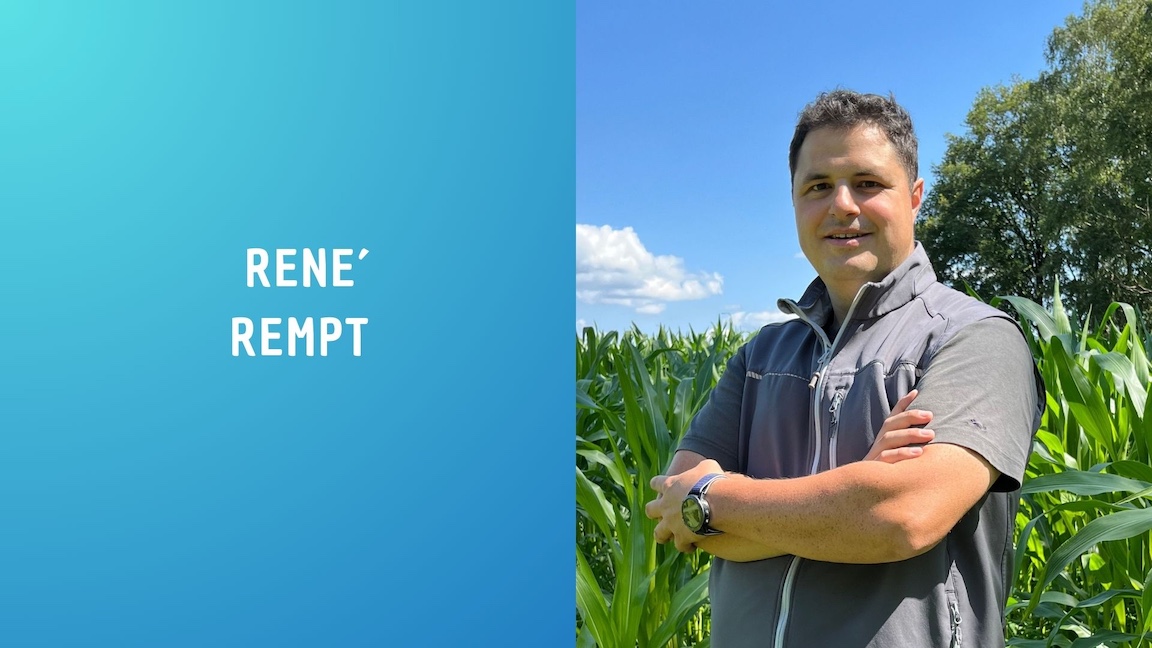
René Rempt is an agricultural scientist and consultant for regenerative no-till agriculture. Growing up on a farm, he gained extensive practical experience in agricultural trade, biogas, and precision farming projects. Today, he combines traditional agriculture with innovative technologies such as AI and digital tools. His hobby is agricultural public relations.
CLICK HERE FOR THE NEW BOOK
The outrage, measured by the minute
What subsequently erupted on social media, and has been going on for several weeks, was almost more revealing to me than the demands of the agricultural lobby itself. As I scrolled through my timeline, the familiar wave of outrage reliably formed. The usual criticism came from urban areas. In countless posts, farmers were branded as incorrigible, backward, and simply hopelessly old-fashioned.
I read the same accusation every minute. Why are tractors rolling into Berlin when subsidies are being cut, but not a single tractor is moving to protest against global warming and the federal government's climate policy? The usual refrain: "If the Greens were in government, you would have protested." Why is the industry once again calling for taxpayer money instead of finally taking to the streets to protest climate change, which is drying out their soil? It's always the same old story, they say, always the knee-jerk reaction of reaching into the public coffers.
After the twentieth post of this kind, one very specific question stuck with me. What exactly do these people expect from a farmer? Should he, after six weeks without a drop of rain, march to the Federal Chancellery with a cardboard sign and register a demonstration against a blocking high-pressure system? Should he protest against the heat? Against three days of scorching sun that cause the wheat to collapse on the stalk? What exactly is he supposed to demonstrate against? Against the month of July, and all this during one of the busiest times of the year?
Three levels of confusion
I work as an independent consultant with arable farms. I see with my own eyes every day what is happening out in the fields, and I look just as objectively at the balance sheets and accounting records of the Farms. That's precisely why I'm not bothered by the criticism of agriculture itself in the posts on X. Criticism is legitimate and necessary. What bothers me is that completely different issues are being conflated here without reflection. It's about global climate protection, about operational climate adaptation, and about the simple solvency of a company in late summer.
After the harvest comes the sowing.
Anyone who has never experienced a farm up close often imagines the agricultural year as linear. In summer, the harvest takes place, the grain is sold, and then there's a lull. But there's no rest in the fields. The moment the harvester leaves the field, the next season's production year begins. The stubble has to be worked, cover crops and rapeseed have to be sown immediately in the remaining soil moisture, and winter cereals follow shortly thereafter.
Here, a debate about harvest yields becomes, within a few weeks, a hard-nosed question of liquidity. Nature doesn't wait for wheat prices to recover on the stock exchanges. Rapeseed demands attention before it's even sown. It's unclear whether the previous year was a financial disaster. To even get the next harvest into the ground, a farm has to make massive upfront investments in August and September. New seeds need to be paid for, fertilizer has to be ordered, machinery consumes fuel, leases are due, and insurance and loans must be serviced. Those who harvested significantly less in the summer due to weather conditions face a huge funding gap in early autumn.
Not a millimeter of rain, but affordable bills
If you dissect Rukwied's demands objectively, something quite mundane becomes apparent. Not a single point in this list will bring even a millimeter of rain to the ground. None of them will lower temperatures in the height of summer. But that's not their purpose at all. These demands don't even claim to be an answer to the climate crisis. They are the pragmatic response to bills that are piling up and need to be paid.
The advance direct payments simply provide faster access to money that the farms are entitled to anyway. The fertilizer subsidy and the fuel relief mitigate the impact. acute expenses. The tax-free risk equalization reserve is the most interesting instrument here because it extends beyond the current year. The principle is remarkably simple. InIn good years with bountiful harvests and high prices, a farm sets aside money tax-free to survive during drought years. This is essentially classic business planning. The problem is this: to build up reserves, you first need good years. If poor harvests, weak producer prices, and high operating costs are repeated for years, eventually there's no buffer left. This is precisely what many arable farms have been facing for the past three years. Then it's no longer about profitability, but about whether the farm can even pre-finance the next sowing.
Criticism, yes; short-sightedness, no.
One can reject each of these demands from the associations politically and economically. One can discuss whether the state should cushion the impact of poor harvests. One can consider the relief on agricultural diesel taxes the wrong approach. One can ask why public funds should be used to help with fertilizer. This is a perfectly legitimate economic policy debate.
However, what one should honestly avoid doing is using this debate as proof that farmers haven't understood climate change. A farmer can practice modern farming methods, build up humus, establish diverse crop rotations, and retain water in the soil as best science allows. However, if a drought, heat wave, cold snap, or excessive rainfall strikes during the year, even the most sustainable farm will lose yield and thus its financial flexibility. There is no contradiction in that same farm subsequently requesting financial assistance to remain operational.
The question of how we make our agriculture climate-resilient is existential. Those who demand this transformation must, however, allow farms the economic breathing room to even reach the next spring. Because without money in the fall, nothing will grow next year.
April 28, 2025
René Rempt is an agricultural scientist and consultant for regenerative no-till agriculture. Growing up on a farm, he gained extensive practical experience in agricultural trade, biogas, and precision farming projects. Today, he combines traditional agriculture with innovative technologies such as AI and digital tools. His hobby is agricultural public relations.
CLICK HERE FOR THE NEW BOOK
Write a comment