Naidoo's delusion
So there he is again, standing in front of the Chancellery. Not as a singer, not as a reformed returnee, not as someone who has truly come to terms with his own misguided past, but as a mouthpiece for the next conspiracy-driven state of emergency. And before anyone else pretends this is a malicious campaign against a misunderstood genius, I'd better say it myself, so it doesn't get swept under the rug: I know Xavier Naidoo. We've met, we've talked, I've known him.
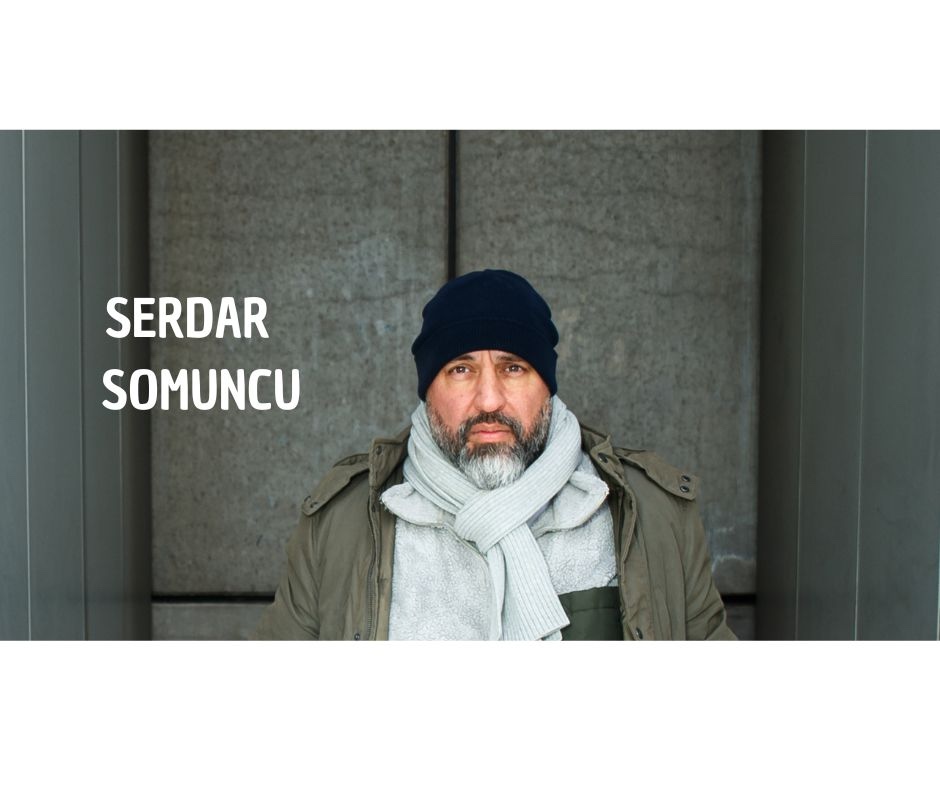
By Serdar Somuncu
By Serdar Somuncu
And I say this explicitly because it's part of the truth: I admire and appreciate Xavier Naidoo as a singer and as a musician. His voice, his musicality, his impact--it's extraordinary. Precisely for that reason, what he's been producing politically for years carries so much weight. One doesn't negate the other. On the contrary: it only makes the contradiction clearer and the disappointment greater.
Even during our initial encounters, I noticed that he repeatedly talked about things that initially seemed like: well, a bit odd, a bit offbeat, perhaps just artistic fantasy, maybe that tendency toward grand pronouncements that some people have when they spend too much time indulging in their own intuition. It sounded like ideas that could easily be mistaken for pure eccentricity. Not immediately as a complete delusion, but rather as a strange mixture of a sense of mission, innuendo, and that odd certainty that he himself understood more than everyone else. Only through the events we've now witnessed in the public eye has it become clear to me that this isn't merely the fantasy of a deluded ideologue. It's a person's unwavering belief in being on the right side. And that's precisely the dangerous point. Because those who are wrong can be corrected. Those who feel called to action consider every contradiction proof.
And there's another point that's personally important to me because it shows how perfidious this whole game has become: Xavier Naidoo publicly apologized in a video, and I even defended him at the time because I believed him. I was ready to say: okay, someone's gone astray, realizes it, pulls the plug, and that has to be acknowledged. That's exactly why what's happening now is so revealing. Because in retrospect, this apology doesn't seem like insight, but rather a maneuver. And while his fans now claim he was forced into it, this very narrative only confirms the old pattern: no matter what happens, in the end everything is reinterpreted so that the prophet is right and reality submits to his myth.
During the appearance in front of the Chancellery, officially in the context of the child abuse and Epstein scandal, precisely this kind of language was used again, language that is never accidental in such circles. There was talk of "cannibals," of "they're eating our babies," of formulations that are not merely drastic but also echo old conspiracy theories with a very real history in Europe. This isn't just tasteless rhetoric; it's the gateway to a political mythology in which real crimes are used as a springboard to construct an all-encompassing narrative about "the elites," "those in power," and the secret control of the world. The perverse thing is: Epstein was real, the crimes were real, the victims are real. That's precisely why it's so insidious when a delusional world is built from this reality, a world in which, in the end, the same code words, the same enemy images, and the same grammars of guilt reappear as always.
And no, this is not a slip-up, not an embarrassing relapse, not a one-off loss of control. The pattern is old. Anyone who remembers knows that years ago, Xavier Naidoo was already active at vigils and in circles where Reichsbürger (citizens of the Reich), conspiracy theorists, and figures from the right-wing milieu weren't just by chance on the fringes, but were quite naturally part of the scene. Even back then, this wasn't an "unfortunate overlap," but a political affinity that was obvious if you wanted to see it. Today, it's simply amplified digitally. Instead of poorly photocopied leaflets, there are streams, Telegram, right-wing influencers, AfD-affiliated websites, and the usual media figures who immediately turn any suggestion into doomsday pornography. That Naidoo connects with these circles, gives interviews there, and is touted as a key witness isn't slander, but the result of years of self-positioning.
The most distasteful aspect of all this remains the fan base, this hardcore who no longer listen, but simply believe. Nothing is checked; everything is confirmed. Every criticism is seen as proof, every distancing as a tactical maneuver, every escalation as a courageous taboo-breaking act. A singer becomes a savior figure for people yearning for a comprehensive explanation. Someone who "speaks out," someone who "dares," someone who "was always right." And the tragedy is: precisely this yearning makes him so politically effective. Because in this milieu, it's not about enlightenment, but about sensationalism. Not about facts, but about outrage. It's enough to throw a few real names, a few genuine scandals, and a few half-baked scraps of information into the mix, and the rest is filled in with imagination and fury.
Anyone who considers this a new development hasn't read the lyrics of recent years.Or perhaps she didn't want to read it. For Naidoo, much of his work revolved around codes, ciphers, and the old trope of supposedly invisible puppeteers. You can argue away each individual word in isolation; that's precisely the trick. It's not the single sentence that's crucial, but the recurring pattern: anonymous powers, manipulated politics, "those in power," shadowy financial elites, hints instead of plain speaking, but always in such a way that the intended audience understands the meaning. The debate surrounding the "dead shield" passage is particularly well-known; it has been discussed for years as an antisemitic code because it doesn't exist in a vacuum, but rather within the context of a whole field of meaning comprised of ciphers, enemy images, and resentments. Naidoo denied this, selling it as criticism of banks or the system, and that's exactly what the legal battle was about. The important point here is that the issue wasn't whether a court would label him a political figure, but rather whether he could be called an antisemite in public discourse. The fact that the Federal Constitutional Court overturned earlier injunctions and strengthened freedom of expression on this point is not a mere aside, but a clear signal of how seriously this debate was taken legally.
The same pattern emerges with homophobia, which all too often appears disguised as a fight against child abuse. This, too, is nothing new. Texts and passages have appeared before that lumped together homosexuality, sexual violence, "rituals," and moral decay, always accompanied by the claim that one only meant well, that one only wanted to protect children. This is the rhetorical camouflage: A morally unassailable issue--child abuse--is constructed, while resentment against minorities and old prejudices are subtly woven into the narrative. Anyone who criticizes this is treated as if they are defending the crime itself. This is precisely why it works so well in conspiracy theory circles: it combines moral panic with political agitation and gives the whole thing a veneer of higher justice.
And then there's the part that I personally find truly disgusting now: the hallucination surrounding the Epstein Files, which has been thrown at me by bloggers and fans alike, as if anyone who can still think two sentences coherently is automatically part of a cover-up. Files that many haven't even read are treated like a finished revelation. Every contact list is used to construct a world explanation, every encounter is interpreted as global guilt, every name as proof of the final reckoning with "the elites." And, of course, it all plays out using the same old code words: secret networks, satanic rituals, children, power, media, control. You don't even have to say the word for it to be clear in which direction this narrative is ideologically veering. Modern antisemitism is often too cowardly for open condemnation and too practiced for crude symbolism. It works with innuendo, codes, and suggestive chains. And that's precisely what makes it appealing even to circles that consider themselves completely harmless.
The bitter thing about Xavier Naidoo isn't just that he talks nonsense. Many people talk nonsense. The bitter thing is that he possesses enormous artistic authority and carries that authority into a political arena that thrives on resentment, conspiracy theories, and a sense of self-righteousness. I can admire and appreciate him as a musician and simultaneously say that I deeply distrust his political stance. There's no contradiction here. On the contrary: precisely because his talent was never the problem, his descent into this world of innuendo, delusion, and ideological appeal is so distasteful. What might once have been dismissed as a quirky fantasy is now clearly a conviction. Not a misunderstanding, not a private eccentricity, not a harmless quirk. Rather, it is the belief of a person who feels justified and thereby strengthens a milieu that has been operating with the same mechanisms for years: fear, innuendo, enemy image, promise of salvation.
February 25, 2026
©Serdar Somuncu
"The new book - Lies - A Cultural History of a Human Weakness"
*Serdar Somuncu is an actor and directord director
LINK TO THE NEW BOOK
Even during our initial encounters, I noticed that he repeatedly talked about things that initially seemed like: well, a bit odd, a bit offbeat, perhaps just artistic fantasy, maybe that tendency toward grand pronouncements that some people have when they spend too much time indulging in their own intuition. It sounded like ideas that could easily be mistaken for pure eccentricity. Not immediately as a complete delusion, but rather as a strange mixture of a sense of mission, innuendo, and that odd certainty that he himself understood more than everyone else. Only through the events we've now witnessed in the public eye has it become clear to me that this isn't merely the fantasy of a deluded ideologue. It's a person's unwavering belief in being on the right side. And that's precisely the dangerous point. Because those who are wrong can be corrected. Those who feel called to action consider every contradiction proof.
And there's another point that's personally important to me because it shows how perfidious this whole game has become: Xavier Naidoo publicly apologized in a video, and I even defended him at the time because I believed him. I was ready to say: okay, someone's gone astray, realizes it, pulls the plug, and that has to be acknowledged. That's exactly why what's happening now is so revealing. Because in retrospect, this apology doesn't seem like insight, but rather a maneuver. And while his fans now claim he was forced into it, this very narrative only confirms the old pattern: no matter what happens, in the end everything is reinterpreted so that the prophet is right and reality submits to his myth.
During the appearance in front of the Chancellery, officially in the context of the child abuse and Epstein scandal, precisely this kind of language was used again, language that is never accidental in such circles. There was talk of "cannibals," of "they're eating our babies," of formulations that are not merely drastic but also echo old conspiracy theories with a very real history in Europe. This isn't just tasteless rhetoric; it's the gateway to a political mythology in which real crimes are used as a springboard to construct an all-encompassing narrative about "the elites," "those in power," and the secret control of the world. The perverse thing is: Epstein was real, the crimes were real, the victims are real. That's precisely why it's so insidious when a delusional world is built from this reality, a world in which, in the end, the same code words, the same enemy images, and the same grammars of guilt reappear as always.
And no, this is not a slip-up, not an embarrassing relapse, not a one-off loss of control. The pattern is old. Anyone who remembers knows that years ago, Xavier Naidoo was already active at vigils and in circles where Reichsbürger (citizens of the Reich), conspiracy theorists, and figures from the right-wing milieu weren't just by chance on the fringes, but were quite naturally part of the scene. Even back then, this wasn't an "unfortunate overlap," but a political affinity that was obvious if you wanted to see it. Today, it's simply amplified digitally. Instead of poorly photocopied leaflets, there are streams, Telegram, right-wing influencers, AfD-affiliated websites, and the usual media figures who immediately turn any suggestion into doomsday pornography. That Naidoo connects with these circles, gives interviews there, and is touted as a key witness isn't slander, but the result of years of self-positioning.
The most distasteful aspect of all this remains the fan base, this hardcore who no longer listen, but simply believe. Nothing is checked; everything is confirmed. Every criticism is seen as proof, every distancing as a tactical maneuver, every escalation as a courageous taboo-breaking act. A singer becomes a savior figure for people yearning for a comprehensive explanation. Someone who "speaks out," someone who "dares," someone who "was always right." And the tragedy is: precisely this yearning makes him so politically effective. Because in this milieu, it's not about enlightenment, but about sensationalism. Not about facts, but about outrage. It's enough to throw a few real names, a few genuine scandals, and a few half-baked scraps of information into the mix, and the rest is filled in with imagination and fury.
Anyone who considers this a new development hasn't read the lyrics of recent years.Or perhaps she didn't want to read it. For Naidoo, much of his work revolved around codes, ciphers, and the old trope of supposedly invisible puppeteers. You can argue away each individual word in isolation; that's precisely the trick. It's not the single sentence that's crucial, but the recurring pattern: anonymous powers, manipulated politics, "those in power," shadowy financial elites, hints instead of plain speaking, but always in such a way that the intended audience understands the meaning. The debate surrounding the "dead shield" passage is particularly well-known; it has been discussed for years as an antisemitic code because it doesn't exist in a vacuum, but rather within the context of a whole field of meaning comprised of ciphers, enemy images, and resentments. Naidoo denied this, selling it as criticism of banks or the system, and that's exactly what the legal battle was about. The important point here is that the issue wasn't whether a court would label him a political figure, but rather whether he could be called an antisemite in public discourse. The fact that the Federal Constitutional Court overturned earlier injunctions and strengthened freedom of expression on this point is not a mere aside, but a clear signal of how seriously this debate was taken legally.
The same pattern emerges with homophobia, which all too often appears disguised as a fight against child abuse. This, too, is nothing new. Texts and passages have appeared before that lumped together homosexuality, sexual violence, "rituals," and moral decay, always accompanied by the claim that one only meant well, that one only wanted to protect children. This is the rhetorical camouflage: A morally unassailable issue--child abuse--is constructed, while resentment against minorities and old prejudices are subtly woven into the narrative. Anyone who criticizes this is treated as if they are defending the crime itself. This is precisely why it works so well in conspiracy theory circles: it combines moral panic with political agitation and gives the whole thing a veneer of higher justice.
And then there's the part that I personally find truly disgusting now: the hallucination surrounding the Epstein Files, which has been thrown at me by bloggers and fans alike, as if anyone who can still think two sentences coherently is automatically part of a cover-up. Files that many haven't even read are treated like a finished revelation. Every contact list is used to construct a world explanation, every encounter is interpreted as global guilt, every name as proof of the final reckoning with "the elites." And, of course, it all plays out using the same old code words: secret networks, satanic rituals, children, power, media, control. You don't even have to say the word for it to be clear in which direction this narrative is ideologically veering. Modern antisemitism is often too cowardly for open condemnation and too practiced for crude symbolism. It works with innuendo, codes, and suggestive chains. And that's precisely what makes it appealing even to circles that consider themselves completely harmless.
The bitter thing about Xavier Naidoo isn't just that he talks nonsense. Many people talk nonsense. The bitter thing is that he possesses enormous artistic authority and carries that authority into a political arena that thrives on resentment, conspiracy theories, and a sense of self-righteousness. I can admire and appreciate him as a musician and simultaneously say that I deeply distrust his political stance. There's no contradiction here. On the contrary: precisely because his talent was never the problem, his descent into this world of innuendo, delusion, and ideological appeal is so distasteful. What might once have been dismissed as a quirky fantasy is now clearly a conviction. Not a misunderstanding, not a private eccentricity, not a harmless quirk. Rather, it is the belief of a person who feels justified and thereby strengthens a milieu that has been operating with the same mechanisms for years: fear, innuendo, enemy image, promise of salvation.
February 25, 2026
©Serdar Somuncu
"The new book - Lies - A Cultural History of a Human Weakness"
*Serdar Somuncu is an actor and directord director
LINK TO THE NEW BOOK
Write a comment