Six months of Merz government: Between ambition and downfall
When Friedrich Merz took office as Chancellor of a CDU/CSU-SPD coalition in May 2025, there was much talk of a political new beginning. But a closer look quickly reveals that the alliance between the CDU/CSU and the SPD is anything but new. It's a familiar power model that has been tested several times in Germany - most recently for many years under Angela Merkel. Between 2005 and 2021, the CDU/CSU governed three times in coalition with the SPD. Sometimes with more, sometimes with less success. What Merz wanted to sell as a "watershed moment" is, in reality, a political recycling project - just with different faces and less substance.
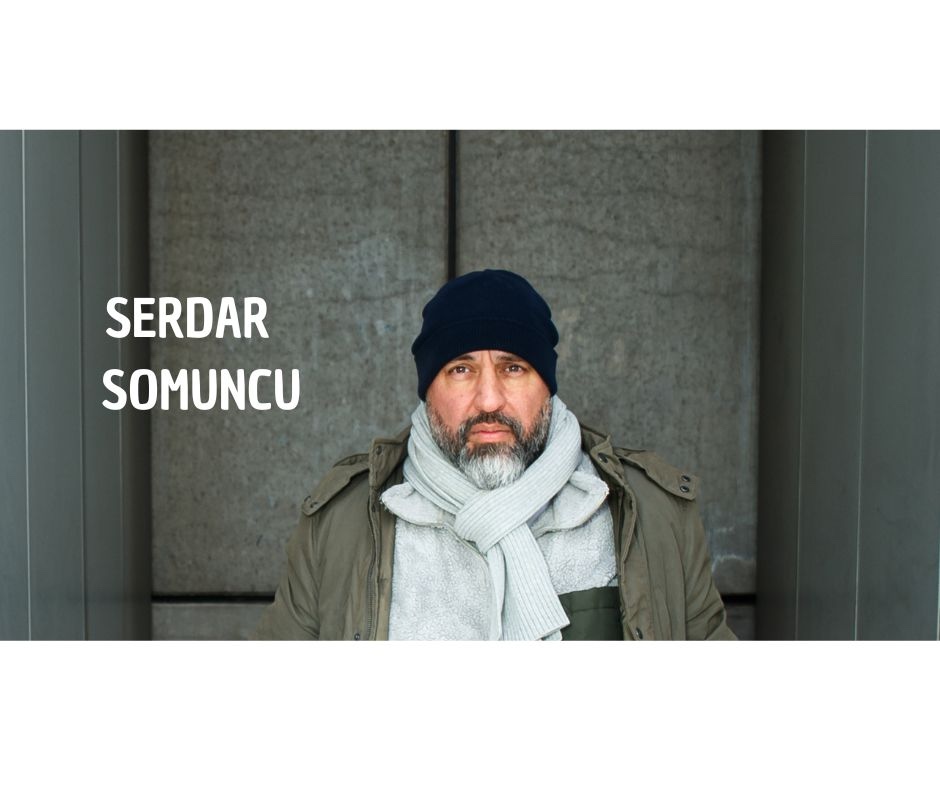
By Serdar Somuncu
By Serdar Somuncu
This starting point alone explains why many voters were skeptical of the new/old coalition from the outset. The impression that the government was governing not out of conviction, but for lack of alternatives, was never entirely dispelled. Merz nevertheless presented himself as a decisive leader: an end to the chaos of the traffic light coalition, an end to order, clarity, and economic competence. His rhetoric was sharper than that of his predecessor, his demeanor more authoritarian, his ambitions greater. And yet: after six months in office, little remains but an interim assessment of disillusionment.
The economic policy offensive is stalling. Although a draft budget with a total volume of over 500 billion euros was presented, almost 82 billion of it is new debt - ironically, under a chancellor who for years positioned himself as a staunch advocate of a balanced budget. The promised deregulation remains vague, the tax reform is on hold, and the confidence of businesses is waning.
In migration policy, figures are being manipulated, but without effect. Since May, around 9,500 people have been turned back at the borders - including about 500 asylum seekers. But the real problem - the overburdened municipalities, sluggish asylum procedures, and a lack of integration - remains unresolved. What the media portrays as a "turning point" is, in reality, mere PR window dressing. There is no sustainable migration policy, only headline-grabbing politics.
Under Merz, the SPD has definitively slipped into the role of a mere extra. Polls consistently show it below 15 percent - a predictable collapse. A party without discernible leadership, without ideas, and without a clear profile. Its ministries appear bland, its messages empty. While the CDU/CSU sets the tone, the SPD is becoming an administrative unit, losing its historical substance. The trust of its own electorate has eroded - especially among those who once believed the SPD would fight for social justice.
Compared to the traffic light coalition under Scholz, this isn't necessarily better - just different. The traffic light coalition often seemed divided, but at least pluralistic. The grand coalition appears coordinated, but lacking in ideas. While Scholz grappled with crises, Merz presented himself as the "Chancellor of normality." But reality is far from normal. The world has become more complex, and simple answers no longer suffice--even if Merz continues to offer them.
And so the Chancellor's role abroad remains lackluster. While Germany continues to present itself as a reliable partner, it lacks impetus, vision, and leadership. Its economic policy ideas sound grand, but remain bogged down in the minutiae of domestic political squabbles. While Economics Minister Klingbeil tries to win over investors in Washington, trust is crumbling at home. Germany's international credibility suffers when its own government actions lack direction.
At the same time, the AfD is growing. Nationwide, it polls at over 25 percent, and in some parts of eastern Germany, it exceeds 35 percent. These figures reflect a massive distrust--not just in individual parties, but in the entire political system. The AfD isn't winning because it has good answers, but because the others no longer offer any. The fear of change, the feeling of losing control, and the anger at symbolic politics--all of this is concentrated in a party whose strength lies in the failures of others.
A ban on the AfD is occasionally discussed, but it's not a solution. It would be an authoritarian knee-jerk reaction to a democratic problem. What's needed instead is political credibility. Results, not rhetoric. Serious engagement with issues like social distribution, internal security, education, and migration--not just as a campaign, but as a fundamental principle. The AfD won't be weakened by insulting it. It will be weakened by implementing policies that work.
After six months under Merz, one thing is clear: the major political shift hasn't materialized. What remains are old patterns in a new guise. The CDU governs as before, the SPD suffers as always, and the country continues to wait for leadership. Perhaps that was precisely the problem: that a coalition that has already exhausted itself several times over declared itself the solution once again. And that's precisely where she now risks failing--not because of the AfD, not because of the complexity of the world, but because of herself.
October 21, 2025
©Serdar Somuncu
"The new book - Lies - A Cultural History of a Human Weakness"
*Serdar Somuncu is an actor and director
LINK TO THE NEW BOOK
The economic policy offensive is stalling. Although a draft budget with a total volume of over 500 billion euros was presented, almost 82 billion of it is new debt - ironically, under a chancellor who for years positioned himself as a staunch advocate of a balanced budget. The promised deregulation remains vague, the tax reform is on hold, and the confidence of businesses is waning.
In migration policy, figures are being manipulated, but without effect. Since May, around 9,500 people have been turned back at the borders - including about 500 asylum seekers. But the real problem - the overburdened municipalities, sluggish asylum procedures, and a lack of integration - remains unresolved. What the media portrays as a "turning point" is, in reality, mere PR window dressing. There is no sustainable migration policy, only headline-grabbing politics.
Under Merz, the SPD has definitively slipped into the role of a mere extra. Polls consistently show it below 15 percent - a predictable collapse. A party without discernible leadership, without ideas, and without a clear profile. Its ministries appear bland, its messages empty. While the CDU/CSU sets the tone, the SPD is becoming an administrative unit, losing its historical substance. The trust of its own electorate has eroded - especially among those who once believed the SPD would fight for social justice.
Compared to the traffic light coalition under Scholz, this isn't necessarily better - just different. The traffic light coalition often seemed divided, but at least pluralistic. The grand coalition appears coordinated, but lacking in ideas. While Scholz grappled with crises, Merz presented himself as the "Chancellor of normality." But reality is far from normal. The world has become more complex, and simple answers no longer suffice--even if Merz continues to offer them.
And so the Chancellor's role abroad remains lackluster. While Germany continues to present itself as a reliable partner, it lacks impetus, vision, and leadership. Its economic policy ideas sound grand, but remain bogged down in the minutiae of domestic political squabbles. While Economics Minister Klingbeil tries to win over investors in Washington, trust is crumbling at home. Germany's international credibility suffers when its own government actions lack direction.
At the same time, the AfD is growing. Nationwide, it polls at over 25 percent, and in some parts of eastern Germany, it exceeds 35 percent. These figures reflect a massive distrust--not just in individual parties, but in the entire political system. The AfD isn't winning because it has good answers, but because the others no longer offer any. The fear of change, the feeling of losing control, and the anger at symbolic politics--all of this is concentrated in a party whose strength lies in the failures of others.
A ban on the AfD is occasionally discussed, but it's not a solution. It would be an authoritarian knee-jerk reaction to a democratic problem. What's needed instead is political credibility. Results, not rhetoric. Serious engagement with issues like social distribution, internal security, education, and migration--not just as a campaign, but as a fundamental principle. The AfD won't be weakened by insulting it. It will be weakened by implementing policies that work.
After six months under Merz, one thing is clear: the major political shift hasn't materialized. What remains are old patterns in a new guise. The CDU governs as before, the SPD suffers as always, and the country continues to wait for leadership. Perhaps that was precisely the problem: that a coalition that has already exhausted itself several times over declared itself the solution once again. And that's precisely where she now risks failing--not because of the AfD, not because of the complexity of the world, but because of herself.
October 21, 2025
©Serdar Somuncu
"The new book - Lies - A Cultural History of a Human Weakness"
*Serdar Somuncu is an actor and director
LINK TO THE NEW BOOK
Write a comment