Further and further apart
That our society is drifting further and further apart should surprise no one anymore.
Families are splitting up over COVID measures, friendships are breaking down over who has the right or wrong political views, and complete strangers are attacking each other in completely superficial and often content-free discussions in comment sections.
Escalations have almost become commonplace. And this is happening even at the most basic level.
By Pascal Danneberg
Families are splitting up over COVID measures, friendships are breaking down over who has the right or wrong political views, and complete strangers are attacking each other in completely superficial and often content-free discussions in comment sections.
Escalations have almost become commonplace. And this is happening even at the most basic level.
By Pascal Danneberg
In my job as a retail salesperson, where I've worked for 13 years now, I witness this development day after day, and the absurd and sometimes shockingly low way people treat each other.
I'm not a university graduate and I don't have a high school diploma. After my admittedly mediocre secondary school leaving certificate, I started an apprenticeship in retail.
School was never for me. And for my 15-year-old self, slogging through subjects I had absolutely no interest in was practically impossible. Since my qualifications limited my options, I specifically looked for an apprenticeship in retail. I was drawn to the whole concept of helping people at this very basic level of fulfilling their needs. Besides, I've always been interested in people in general. I've always found a wide variety of personalities and their nuances fascinating. And in this way, I was able to meet people every day. I found it fascinating to philosophize about who these people were, what they wanted, and of course, to advise and help them, and certainly to guide them a little. That sounds worse than it actually was. In the end, people just wanted things for their hobby. I simply helped them find the right thing. And, as is typical for a salesperson, I did this in conjunction with boosting sales a bit.
My first stop was a motorcycle clothing store in 2012. The atmosphere was rough, but friendly. The customers and colleagues were a diverse mix of personalities. There was what most people would consider a classic biker, in a leather vest on a Harley, the suit-wearing businessman who took his very expensive motorcycle out for a ride on the weekend, parents buying their children's first gear for their motorcycle license test, and the 80-year-old who had been riding his motorcycle every day for 30 years and didn't even own a car. New encounters every day. As a 16-year-old, you often had to earn the customers' respect and were met with a certain amount of skepticism. But once people realized you were enthusiastic, took their wishes and needs seriously, and quickly and thoroughly familiarized yourself with the subject matter, you quickly earned their respect.
Irrational or exaggerated arguments were rare. Of course, things sometimes broke or needed to be returned. We humans aren't perfect, and unfortunately, neither is what we produce. That's human nature, and most people understood this and rarely reacted with much incomprehension or anger. Mutual respect was almost always maintained. Of course, there were exceptions, but in my personal experience, these occurred, if at all, only two or three times a year. These were stories I still remember and laugh about today.
Throughout my apprenticeship, this remained the case for a while. Unfortunately, I didn't stay with the company, and after three years of training and daily routine, I had to look for a new job. In the following years, I took jobs at three different retail companies, and I already had the feeling that there was often a different atmosphere in communication.
I didn't really question this. After all, it was a different clientele in different stores, with different needs. How could it be otherwise?
However, at the end of 2018, I started working again at the company where I had completed my apprenticeship. I was happy to be back, and for the first few days, it felt like I had just been on a very long vacation. Unfortunately, it quickly became clear to me that a lot had changed. The customers' tone had changed; the interesting conversations and stories were gone.
It was colder, more distant, simply different, even though it was the same clientele, and in some cases, even the exact same customers as a few years before. I therefore had a direct comparison and noticed that something had changed, at least superficially. I noticed it, but I didn't really question it, at least not what the cause might be.
In retrospect, this was the beginning of a trend that would continue to decline, and in which respect and community would be steadily lost. Perhaps the political debates since 2015 and the conflicts associated with them were what first created the rifts in our social interactions.
I started the job at the beginning of 2020.which is where I still find myself today. Corona was still in its infancy. We'd heard the first reports from around the world, but initially dismissed it as just another bird or swine flu outbreak. The prevailing attitude was that it would be blown completely out of proportion by the media, only to disappear again in a few weeks. We all know how that played out.
Now, I was in a relatively new job and was immediately put on furlough. A few weeks after the first lockdown, we were allowed to reopen the shop for appointments, and that's when the first arguments began that made me question the very concept of normal, polite interaction. People complained about not being allowed in because they didn't have an appointment, complained to us sales staff about the measures, and didn't understand why we had to comply. There were discussions about the need to wear masks, maintain social distancing, or why they weren't allowed in without a test or vaccination.
The pandemic not only physically distanced us, but in my experience, definitely also on a personal level.
Now we're in 2025, and this atmosphere, this distance, has persisted to this day. Friends and family also say that since the pandemic, society and how we interact with each other are no longer the same. "Since the pandemic, everyone's gone crazy," is a common refrain, and based on my own daily experience, I can only rarely, if ever, disagree.
As part of the branch management team, I increasingly have to interact with people who often behave so far removed from any form of normal, polite interaction that I find myself wondering almost weekly what's going on in their heads.
Recently, I had to apologize to a customer and immediately offered her a solution. But she insisted on venting her frustration. She repeatedly emphasized the disadvantage she was experiencing and how much time she was losing. Something I never denied. On the contrary, my apology for the inconvenience already included an acknowledgment of the problems she was facing. Nevertheless, she considered it absolutely crucial to keep elaborating on this point and didn't address my concerns at all. It seemed as if she was deliberately trying to escalate the entire situation.
People get so worked up about such trivial matters that one wonders where they get the energy to attach so much importance to insignificance. And if it happens to be a perfectly legitimate complaint, legal action is often sought or at least threatened. Finding a solution on a human level between two parties has become increasingly rare. It often feels like it's simply about gaining the greatest possible advantage from the situation or making the other person feel as disappointed or angry as possible about the whole thing.
Even trying to explain to people that they also need to put a little work or care into their belongings so they don't break or wear out more slowly often leads to misunderstanding and accusations of supposedly poor customer service.
Even trying to explain to people that they also need to put a little work or care into their belongings so they don't break or wear out more slowly often leads to misunderstanding and accusations of supposedly poor customer service.
I once had a discussion with someone complaining about rust on steel parts that had formed over the winter. I explained that using equipment during the winter, with its wet, cold, and salty roads, leads to rust and corrosion particularly quickly, and that even end consumers have to be careful. After all, we can't be in customers' homes every day explaining exactly what to do. Nevertheless, I offered to accommodate him and cover part of the cost as a goodwill gesture. But even then, the argument became increasingly heated on his part, and he just kept repeating, almost like a mantra, that he didn't see why we should have to pay anything and that we were responsible. I refused, and he suddenly started threatening to call the police. Aside from the fact that the police obviously weren't interested in such cases and had no jurisdiction, I ended the discussion at that point and asked him to leave. Here, too, the impression remained strong that everyone was only interested in pursuing their own advantage, without the slightest interest in compromise, let alone in self-criticism and self-reflection.
Such endless and pointless discussions with irrational demands eventually lead to a situation where one has to pull the emergency brake to bring people back down to earth. This therefore endsUnfortunately, it's becoming increasingly common to have to ban more and more customers, even though their problem has been acknowledged and accepted, and we wanted to help them. Sadly, they often drive themselves into such a frenzy and become so irrational, fueled by their personal dissatisfaction, lack of self-reflection, and almost vindictiveness, that we eventually lose the desire, energy, and even the ability to help them.
These kinds of discussions have become increasingly prevalent in all our lives and occur in every area. Whether it's a discussion about a broken bicycle, or about whether someone is left-wing or right-wing, for or against Ukraine, for or against Israel, they all have one thing in common: they all teeter on the brink of escalation.
There are fewer and fewer nuanced and solution-oriented discussions. It's all about who is ultimately right. People only think about themselves and how to enforce what they personally consider absolute and right, no matter the cost. Even if it means making a fool of themselves in public. That a certain degree of selfishness is inherent in all of us is simply what makes us human. Nevertheless, people like me definitely feel that something has changed in how we interact with one another.
I believe this is a development that, on this basic level, also reflects what we can observe in our general social discourse: an increasing tendency to escalate conflicts, to insist on one's personal opinion, assumption, or desires, and to completely disregard the humanity of the other person. This applies whether it's the fact that none of us are perfect and mistakes can happen, or that we don't all agree and very likely never will. This would require that we all grow up with the same impressions, desires, and education. Both of these, however, require that we see ourselves again for what we all are: human beings.
We urgently need more composure and the ability to truly listen to one another and accept our shared humanity. Otherwise, we will permanently lose the ability to resolve conflicts peacefully.
We urgently need more composure and the ability to truly listen to one another and accept our shared humanity.
October 15, 2025
© Pascal Danneberg
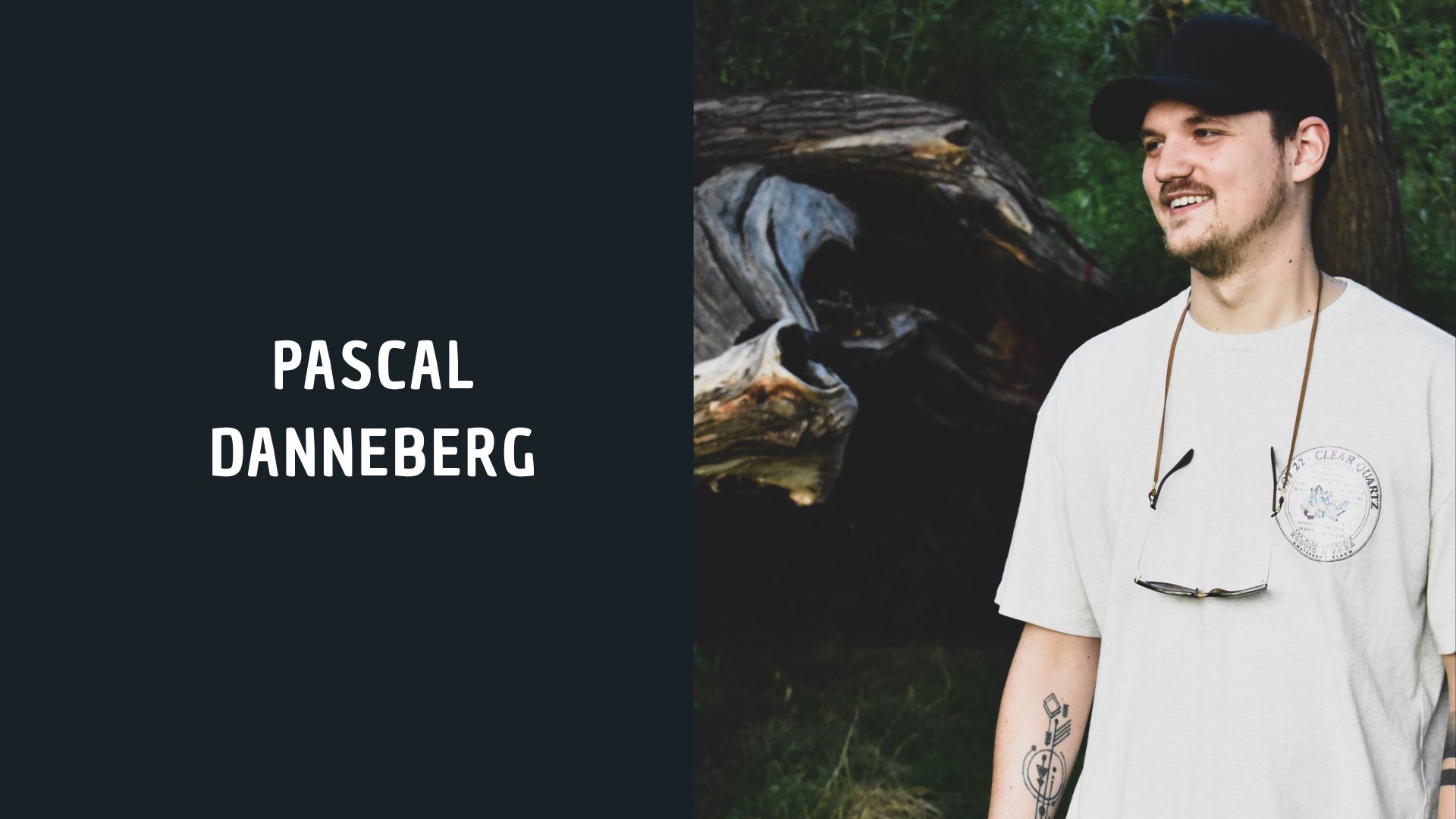
Pascal Danneberg (born 1995) lives in the Nuremberg region and is a trained retail salesman.
Besides his passion for gaming, he is particularly interested in what motivates people in culture, politics, philosophy, and everyday life.
His new book, "Lies - A Cultural History of a Human Weakness," is available now.
CLICK HERE FOR THE NEW BOOK
I'm not a university graduate and I don't have a high school diploma. After my admittedly mediocre secondary school leaving certificate, I started an apprenticeship in retail.
School was never for me. And for my 15-year-old self, slogging through subjects I had absolutely no interest in was practically impossible. Since my qualifications limited my options, I specifically looked for an apprenticeship in retail. I was drawn to the whole concept of helping people at this very basic level of fulfilling their needs. Besides, I've always been interested in people in general. I've always found a wide variety of personalities and their nuances fascinating. And in this way, I was able to meet people every day. I found it fascinating to philosophize about who these people were, what they wanted, and of course, to advise and help them, and certainly to guide them a little. That sounds worse than it actually was. In the end, people just wanted things for their hobby. I simply helped them find the right thing. And, as is typical for a salesperson, I did this in conjunction with boosting sales a bit.
My first stop was a motorcycle clothing store in 2012. The atmosphere was rough, but friendly. The customers and colleagues were a diverse mix of personalities. There was what most people would consider a classic biker, in a leather vest on a Harley, the suit-wearing businessman who took his very expensive motorcycle out for a ride on the weekend, parents buying their children's first gear for their motorcycle license test, and the 80-year-old who had been riding his motorcycle every day for 30 years and didn't even own a car. New encounters every day. As a 16-year-old, you often had to earn the customers' respect and were met with a certain amount of skepticism. But once people realized you were enthusiastic, took their wishes and needs seriously, and quickly and thoroughly familiarized yourself with the subject matter, you quickly earned their respect.
Irrational or exaggerated arguments were rare. Of course, things sometimes broke or needed to be returned. We humans aren't perfect, and unfortunately, neither is what we produce. That's human nature, and most people understood this and rarely reacted with much incomprehension or anger. Mutual respect was almost always maintained. Of course, there were exceptions, but in my personal experience, these occurred, if at all, only two or three times a year. These were stories I still remember and laugh about today.
Throughout my apprenticeship, this remained the case for a while. Unfortunately, I didn't stay with the company, and after three years of training and daily routine, I had to look for a new job. In the following years, I took jobs at three different retail companies, and I already had the feeling that there was often a different atmosphere in communication.
I didn't really question this. After all, it was a different clientele in different stores, with different needs. How could it be otherwise?
However, at the end of 2018, I started working again at the company where I had completed my apprenticeship. I was happy to be back, and for the first few days, it felt like I had just been on a very long vacation. Unfortunately, it quickly became clear to me that a lot had changed. The customers' tone had changed; the interesting conversations and stories were gone.
It was colder, more distant, simply different, even though it was the same clientele, and in some cases, even the exact same customers as a few years before. I therefore had a direct comparison and noticed that something had changed, at least superficially. I noticed it, but I didn't really question it, at least not what the cause might be.
In retrospect, this was the beginning of a trend that would continue to decline, and in which respect and community would be steadily lost. Perhaps the political debates since 2015 and the conflicts associated with them were what first created the rifts in our social interactions.
I started the job at the beginning of 2020.which is where I still find myself today. Corona was still in its infancy. We'd heard the first reports from around the world, but initially dismissed it as just another bird or swine flu outbreak. The prevailing attitude was that it would be blown completely out of proportion by the media, only to disappear again in a few weeks. We all know how that played out.
Now, I was in a relatively new job and was immediately put on furlough. A few weeks after the first lockdown, we were allowed to reopen the shop for appointments, and that's when the first arguments began that made me question the very concept of normal, polite interaction. People complained about not being allowed in because they didn't have an appointment, complained to us sales staff about the measures, and didn't understand why we had to comply. There were discussions about the need to wear masks, maintain social distancing, or why they weren't allowed in without a test or vaccination.
The pandemic not only physically distanced us, but in my experience, definitely also on a personal level.
Now we're in 2025, and this atmosphere, this distance, has persisted to this day. Friends and family also say that since the pandemic, society and how we interact with each other are no longer the same. "Since the pandemic, everyone's gone crazy," is a common refrain, and based on my own daily experience, I can only rarely, if ever, disagree.
As part of the branch management team, I increasingly have to interact with people who often behave so far removed from any form of normal, polite interaction that I find myself wondering almost weekly what's going on in their heads.
Recently, I had to apologize to a customer and immediately offered her a solution. But she insisted on venting her frustration. She repeatedly emphasized the disadvantage she was experiencing and how much time she was losing. Something I never denied. On the contrary, my apology for the inconvenience already included an acknowledgment of the problems she was facing. Nevertheless, she considered it absolutely crucial to keep elaborating on this point and didn't address my concerns at all. It seemed as if she was deliberately trying to escalate the entire situation.
People get so worked up about such trivial matters that one wonders where they get the energy to attach so much importance to insignificance. And if it happens to be a perfectly legitimate complaint, legal action is often sought or at least threatened. Finding a solution on a human level between two parties has become increasingly rare. It often feels like it's simply about gaining the greatest possible advantage from the situation or making the other person feel as disappointed or angry as possible about the whole thing.
Even trying to explain to people that they also need to put a little work or care into their belongings so they don't break or wear out more slowly often leads to misunderstanding and accusations of supposedly poor customer service.
Even trying to explain to people that they also need to put a little work or care into their belongings so they don't break or wear out more slowly often leads to misunderstanding and accusations of supposedly poor customer service.
I once had a discussion with someone complaining about rust on steel parts that had formed over the winter. I explained that using equipment during the winter, with its wet, cold, and salty roads, leads to rust and corrosion particularly quickly, and that even end consumers have to be careful. After all, we can't be in customers' homes every day explaining exactly what to do. Nevertheless, I offered to accommodate him and cover part of the cost as a goodwill gesture. But even then, the argument became increasingly heated on his part, and he just kept repeating, almost like a mantra, that he didn't see why we should have to pay anything and that we were responsible. I refused, and he suddenly started threatening to call the police. Aside from the fact that the police obviously weren't interested in such cases and had no jurisdiction, I ended the discussion at that point and asked him to leave. Here, too, the impression remained strong that everyone was only interested in pursuing their own advantage, without the slightest interest in compromise, let alone in self-criticism and self-reflection.
Such endless and pointless discussions with irrational demands eventually lead to a situation where one has to pull the emergency brake to bring people back down to earth. This therefore endsUnfortunately, it's becoming increasingly common to have to ban more and more customers, even though their problem has been acknowledged and accepted, and we wanted to help them. Sadly, they often drive themselves into such a frenzy and become so irrational, fueled by their personal dissatisfaction, lack of self-reflection, and almost vindictiveness, that we eventually lose the desire, energy, and even the ability to help them.
These kinds of discussions have become increasingly prevalent in all our lives and occur in every area. Whether it's a discussion about a broken bicycle, or about whether someone is left-wing or right-wing, for or against Ukraine, for or against Israel, they all have one thing in common: they all teeter on the brink of escalation.
There are fewer and fewer nuanced and solution-oriented discussions. It's all about who is ultimately right. People only think about themselves and how to enforce what they personally consider absolute and right, no matter the cost. Even if it means making a fool of themselves in public. That a certain degree of selfishness is inherent in all of us is simply what makes us human. Nevertheless, people like me definitely feel that something has changed in how we interact with one another.
I believe this is a development that, on this basic level, also reflects what we can observe in our general social discourse: an increasing tendency to escalate conflicts, to insist on one's personal opinion, assumption, or desires, and to completely disregard the humanity of the other person. This applies whether it's the fact that none of us are perfect and mistakes can happen, or that we don't all agree and very likely never will. This would require that we all grow up with the same impressions, desires, and education. Both of these, however, require that we see ourselves again for what we all are: human beings.
We urgently need more composure and the ability to truly listen to one another and accept our shared humanity. Otherwise, we will permanently lose the ability to resolve conflicts peacefully.
We urgently need more composure and the ability to truly listen to one another and accept our shared humanity.
October 15, 2025
© Pascal Danneberg
Pascal Danneberg (born 1995) lives in the Nuremberg region and is a trained retail salesman.
Besides his passion for gaming, he is particularly interested in what motivates people in culture, politics, philosophy, and everyday life.
His new book, "Lies - A Cultural History of a Human Weakness," is available now.
CLICK HERE FOR THE NEW BOOK
Write a comment