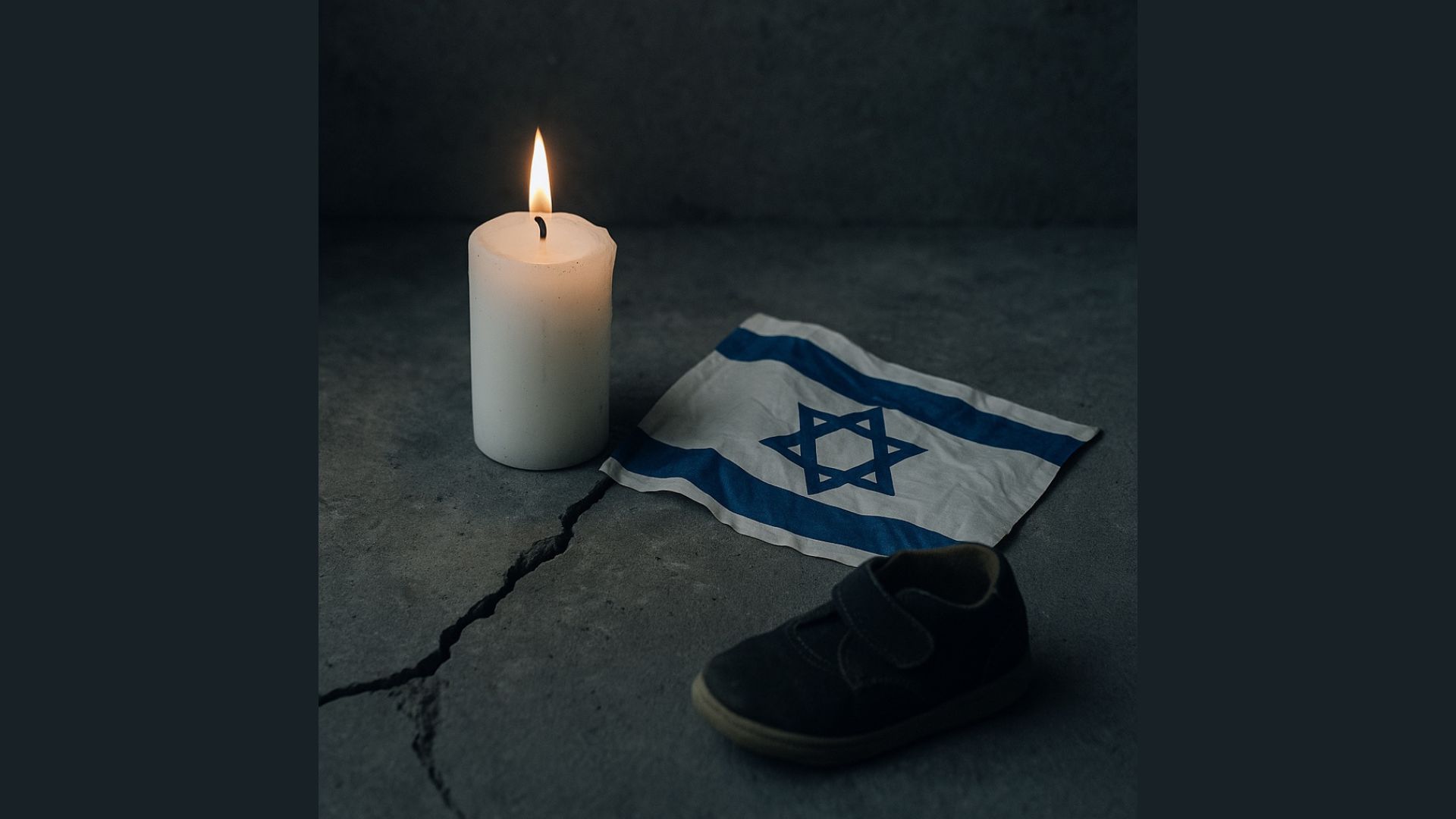
October 7th - and what we (didn't) learn from it
Two years after Hamas's massacre of Israeli civilians, the world stands at a moral crossroads. In Berlin, people are demonstrating who claim to want peace--yet carry their hatred into the streets. The suffering of the Palestinians is real, but it must not become a tool of terror. This war could end today if Hamas lays down its arms. But as long as it continues to shoot, everyone suffers--and we are losing our capacity for compassion.
By Serdar Somuncu
By Serdar Somuncu
October 7th marks the anniversary of one of the most horrific crimes in recent history - the Hamas attack on Israel in 2023. Over a thousand people were murdered, tortured, burned, raped, and abducted. Families were wiped out, children dragged from their beds, the elderly beaten, and babies kidnapped. It was the largest massacre of Jews since the Holocaust - and yet, even here in Germany, we hear voices today that relativize, downplay, or even celebrate it. October 7th was not a "reaction," not a "liberation struggle." It was pure Jew-hatred - religiously disguised, politically exploitable, but at its core: hatred of life itself.
And that is precisely what is so appalling: that the reaction to this massacre was not compassion, but demonstrations. Not shock, but jeering. In Berlin, in the heart of the city where books by Jewish authors were once burned, people march today with flags, slogans, and a self-righteousness that takes your breath away. They call it "solidarity with Palestine," but they mean the destruction of Israel. They shout "freedom," but they mean death. They call themselves "anti-colonialists," but harbor the same hatred in their hearts that is familiar from the darkest chapters of our history.
It's macabre what's happening here: On the one hand, the commemoration of the victims of a bestial massacre; on the other, the spectacle of a moral carnival where terror is downplayed and perpetrators celebrated. And the state? It watches, debates the right to assembly and freedom of expression, while Jews in Germany are once again afraid to wear a kippah or publicly profess their identity. We are witnessing the crumbling of civilization--and no one is calling a spade a spade.
But the truth is: People are suffering on the other side, too. In Gaza, families, children, and the elderly live--people who are not Hamas fighters, who sit in basements while bombs fall, who suffer from hunger, who lose their loved ones, who are born and raised in the shadow of terror without ever having experienced freedom. The suffering of the Palestinian population is real, unimaginable. And tragic - but it is not Israel's fault, but rather the result of an organization that uses its own people as human shields.
This war could end today. Not tomorrow, not sometime in the future - today. If Hamas lays down its weapons and releases the hostages, if it finally does what any civilized society would demand: prioritize life over death. But it doesn't. Because it doesn't care about the suffering of its own people. Because it needs death to fuel its own narrative. Because dead children make for better images than peace negotiations.
And yet, the suffering of the Palestinians must not be ignored. It is possible to see both: the horror of the massacre and the misery of the bombings. Compassion is not a one-way street. But it loses its value when it becomes blind to cause and responsibility. Those who lament the suffering of the Palestinians must also say who caused it. Those who want peace must not worship the wrong heroes.
October 7th is not a distant event. He is a mirror. He shows us how dangerous it is when empathy transforms into ideology and compassion is replaced by slogans. When the victims of terror are mocked in the streets of Berlin, that is not "protest," but moral decay.
To remember is to act. And to act is to take a stand--clearly, without relativizing, but with heart. October 7th reminds us that "Never again" only has meaning if it applies to all people: to Jews, to Palestinians, to everyone who lives. But there can be no peace as long as terror is celebrated as resistance and violence is considered the language of justice.
This war could be over tomorrow if Hamas simply stopped shooting. But it will continue as long as people in Berlin believe that murder is a political tool.
Those who remain silent today become complicit tomorrow.
October 7, 2025
©Serdar Somuncu
"The new book - Lies - A Cultural History of a Human Weakness"
*Serdar Somuncu is an actor and director
CLICK HERE FOR THE NEW BOOK
And that is precisely what is so appalling: that the reaction to this massacre was not compassion, but demonstrations. Not shock, but jeering. In Berlin, in the heart of the city where books by Jewish authors were once burned, people march today with flags, slogans, and a self-righteousness that takes your breath away. They call it "solidarity with Palestine," but they mean the destruction of Israel. They shout "freedom," but they mean death. They call themselves "anti-colonialists," but harbor the same hatred in their hearts that is familiar from the darkest chapters of our history.
It's macabre what's happening here: On the one hand, the commemoration of the victims of a bestial massacre; on the other, the spectacle of a moral carnival where terror is downplayed and perpetrators celebrated. And the state? It watches, debates the right to assembly and freedom of expression, while Jews in Germany are once again afraid to wear a kippah or publicly profess their identity. We are witnessing the crumbling of civilization--and no one is calling a spade a spade.
But the truth is: People are suffering on the other side, too. In Gaza, families, children, and the elderly live--people who are not Hamas fighters, who sit in basements while bombs fall, who suffer from hunger, who lose their loved ones, who are born and raised in the shadow of terror without ever having experienced freedom. The suffering of the Palestinian population is real, unimaginable. And tragic - but it is not Israel's fault, but rather the result of an organization that uses its own people as human shields.
This war could end today. Not tomorrow, not sometime in the future - today. If Hamas lays down its weapons and releases the hostages, if it finally does what any civilized society would demand: prioritize life over death. But it doesn't. Because it doesn't care about the suffering of its own people. Because it needs death to fuel its own narrative. Because dead children make for better images than peace negotiations.
And yet, the suffering of the Palestinians must not be ignored. It is possible to see both: the horror of the massacre and the misery of the bombings. Compassion is not a one-way street. But it loses its value when it becomes blind to cause and responsibility. Those who lament the suffering of the Palestinians must also say who caused it. Those who want peace must not worship the wrong heroes.
October 7th is not a distant event. He is a mirror. He shows us how dangerous it is when empathy transforms into ideology and compassion is replaced by slogans. When the victims of terror are mocked in the streets of Berlin, that is not "protest," but moral decay.
To remember is to act. And to act is to take a stand--clearly, without relativizing, but with heart. October 7th reminds us that "Never again" only has meaning if it applies to all people: to Jews, to Palestinians, to everyone who lives. But there can be no peace as long as terror is celebrated as resistance and violence is considered the language of justice.
This war could be over tomorrow if Hamas simply stopped shooting. But it will continue as long as people in Berlin believe that murder is a political tool.
Those who remain silent today become complicit tomorrow.
October 7, 2025
©Serdar Somuncu
"The new book - Lies - A Cultural History of a Human Weakness"
*Serdar Somuncu is an actor and director
CLICK HERE FOR THE NEW BOOK
Write a comment